


Citizen scientists armed with sensors and cameras are exposing toxic pollution in port cities and challenging institutions to act – the view from Albania, Italy, and the Netherlands.
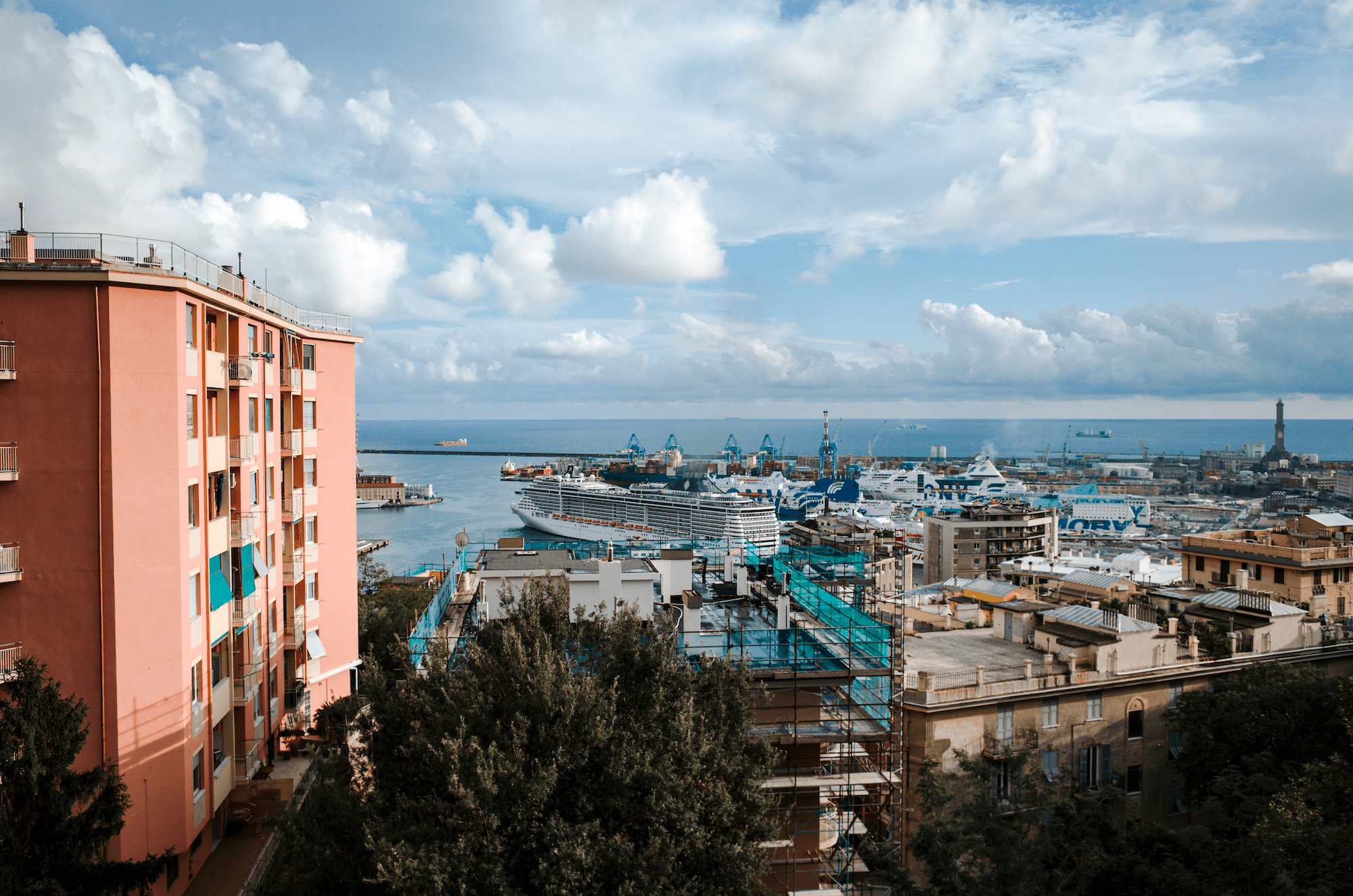
“See? This is what we breathe in every day,” says Mauro Burlando, a resident of the San Teodoro neighborhood in Genoa, pointing to the black smoke coming out of the funnel of a giant cruise ship leaving one of Italy’s largest ports. Although the quay is one kilometer away, the smell of fumes and the incessant noise of running engines have always been part of daily life in the neighborhood, as has disease.
“Out of 120 families, we’ve had 33 deaths from cancer in 35 years,” Burlando says. For a year now, however, resignation has turned into action: Mauro and his wife Gabriella, together with other citizens and local associations, began documenting the fumes with photographs on Facebook and measuring emissions with small devices hung outside their balconies.
“We shouldn’t have to fight to breathe,” says lawyer Anna Gerometta, president of the NGO Cittadini per l’aria that brings together similar citizen science initiatives across Italy. “Public authorities should do this.”
Genoa shares the fate of many other European port cities, where maritime traffic and the industries often concentrated in these areas are essential to the local economy, but at the same time cause severe air pollution that affects citizens’ health. Sulfur and nitrogen oxides resulting from fossil fuel combustion can contribute to respiratory and cardiovascular illnesses, while fine particulate matter can even enter the bloodstream and cause systemic organ damage.
Last December, the new European Union air-quality directive entered into force, lowering the limit values for pollutants and requiring member states to comply by 2030. Even so, some complain that the EU didn’t go far enough.
“The authorized levels are still too high compared to what the WHO recommends, and there is a loophole for ‘zones where conditions are particularly difficult’ to postpone the deadline compliance,” says Sonke Diesener, policy officer at NABU. Her organization, Germany’s largest environmental NGO, has been monitoring port pollution for more than a decade. “Anyway, it will still be very ambitious for port cities to get down to those levels. The problem is that we are lacking control and enforcement.”
That is where citizen science steps in. This cross-border investigation sheds light on grassroots initiatives in port areas in the Netherlands, Italy, and Albania, where local communities are independently monitoring pollution and using the results to pressure authorities.
Genoa, Living by the Sea and in the Smoke
In June 1999, Marina Bellinazzo, a citizen of Genoa, wrote to the local environmental protection office and the Harbormaster’s Office: “I wish to report the air pollution caused for several hours almost every day by emissions and smoke from passenger ships and container ships docked at various piers in the port.” She lists the ships, recalls the regulations to which ships should comply, and concludes: “All this in defense of the health of the citizens.”
Twenty-five years later, with the same determination, 17 associations in the city, particularly in the San Teodoro district, formed a network to keep pressing for accountability for air quality. From the balconies of their homes, volunteers can see the sea, cruise ships, and ferries.
The Port Sentinels
Dissatisfied with the work of the port authority and other bodies that are supposed to monitor and reduce pollution levels, a group of citizens became “Air Watchers” and every day they look out of their windows or go to the harbor and take photos of ships emitting black smoke while in port. In addition to this type of activity, they provide data to the local administration and the environmental protection agency.
By bringing together the professional skills of the association members, everyone contributes their own expertise. The 17 associations that make up the network include engineers, technicians, biologists, and doctors, who lend credibility to the data collected. There are also people who have found in this form of environmental activism a way to contribute to protecting their own health and that of those who live in their neighborhood.
When we meet with representatives of associations in San Teodoro, they show us studies that, over the years, have highlighted the risks of such intense exposure to fumes from moored ships. “The port,” we read in a 2018 magazine for doctors and dentists, “is, after healthcare, the field that offers the highest employment rate in Genoa, when all related industries are included. But it is absolutely urgent that this activity be carried out with respect for the environment and the health of all Genoa’s citizens.”
The tradeoff between work and health in the city is still an issue that needs to be addressed. “It’s a bit difficult to talk about it with those who live in our own spaces, our city,” says Eliana Pastorino, the network’s spokesperson. “But we want to make people aware that the air they are breathing is not always good.”

Pushing Authorities to Do More
In order to compare data with official figures and to implement a monitoring system, the activists have purchased Radiello professional air-sampling devices. So light that they can even be attached to clothing, in Genoa, they hang from balconies to sense pollution from the port.
‘The work we have done complements that of the institutions,” adds Federico Valerio, from the network. “We have mapped pollution and the most exposed areas. We then share a daily air-quality bulletin: wind, rain, concentrations of nitrogen dioxide and sulfur dioxide – and the amount of vehicular and maritime traffic.” This update is posted on Facebook.
Many goals have been achieved in recent years: positive feedback from the Harbormaster’s Office has led to more checks, including on direct reports from the sentinels, while the Liguria region’s ombudsman and health guarantor has also become involved. He helped the network by requesting information from official bodies and protecting collective interests, including in the health sector.
Some hurdles remain. First of all, the voluntary work of citizens cannot replace the shortcomings of public actors involved in public health; then there is the difficult dialogue with Marco Bucci, a former Genoa mayor who now heads the regional administration. The network’s attempts to raise health issues have been ignored, it complains, although recently members of both the regional administration and Genoa’s city council have participated in network meetings.
Finally, there is an important issue regarding port innovation: with aid from the National Recovery and Resilience Plan – backed by EU post-pandemic recovery funds – part of the port of Genoa is being electrified, with work scheduled for completion at the end of the year. Once an electricity supplier has been selected and a price negotiated, cruise ships will be able to connect directly to the grid without having to remain powered up through their own resources for the entire time they are docked. This should be a turning point for the health of Genoa’s citizens.
Young Citizen Scientists Test the Air in Durres
When we think of youth and social media, it’s most often in terms of entertainment or staying in touch with friends. But in the Albanian city of Durres, a group of young people are using social media to unite around important causes, such as environmental protection.
With national and local environmental bodies not regularly measuring air quality, these young people in the country’s second-largest city – and the one with the largest port – have taken air-quality monitoring into their own hands. With portable devices in hand, they measure pollutant levels at some of the most critical points of the port, providing scientific data that the authorities are failing to deliver.
The port of Durres, one of Albania’s most important commercial hubs, is a key center for maritime and road transport, as well as industrial activity. Yet, beyond the flow of goods and people, the area also generates pollution that directly impacts the health of nearby residents. To shed light on the issue, local activists carried out air-quality measurements around the port, while our team of journalists and camera crew was on the ground to document the process.
Thanks to handheld sensors widely used in community-based and alternative data-collection efforts, the young activists collected a reliable snapshot of air quality that complements official monitoring systems.
Denisa Kasa, a 25-year-old from Durres and one of the organizers of the local environmental activist network – which started through social media – recalls with nostalgia her childhood afternoons near the former Volga promenade.
“A strong sea breeze used to blow, and I can still feel it today. Now you have to escape the city to experience it,” she says.
Kasa is just one of the local young people who have decided not to remain passive in the face of air pollution. They are increasingly raising their voices about the environment. “We, residents of Durres, can barely find a corner where we can breathe clean air. That is why we decided to measure it ourselves.”
The activist network she is part of includes more than 200 people connected through a WhatsApp group, with several dozen actively engaging in monitoring and awareness activities. Their work is supported by the Co-PLAN Institute for Habitat Development, one of Albania’s most respected civil society organizations in the field of urban development and the environment. Co-PLAN’s Green Lungs initiative raised money to purchase portable devices to monitor air, water, soil, and noise pollution and now provides expert guidance and validation of the data collected. The results are then published online through interactive maps and reports, ensuring both transparency and public awareness.
The Measurements: A Concerning Picture
The activists recorded levels of four major pollutants: carbon dioxide, carbon monoxide, fine particulate matter (PM 2.5), and coarse particulate matter (PM 10), as well as nitrogen dioxide. Measurements were carried out at five strategic points around the port, where vehicle traffic and industrial activity are most concentrated. Each site was monitored at a specific moment in time, with the aim of capturing spatial differences and providing a representative snapshot of current air quality rather than a long-term dataset.
Nationwide, Co-PLAN’s Green Lungs initiative has established over 800 monitoring points in the capital Tirana, Durres, and four other cities. These efforts collectively contribute to a comprehensive, citizen-led, environmental-monitoring platform that empowers local communities and informs policy development.
According to Co-PLAN environmental expert Imeldi Sokoli, his organization used a methodology based on the monitoring efforts of other Albanian civic groups, with the aim not only of providing an overview of the situation but also of raising public awareness.
“Institutions often lack the funds for such studies, which is why the involvement of young people and the community is essential,” he says.
The results painted a concerning picture: fine and coarse particulate matter exceeded the legal limit by up to two and three-and-a-half times respectively, confirming these pollutants as the main health threat. Carbon dioxide levels were several times above standards, reflecting intense urban and industrial pressure. Nitrogen dioxide remained within the allowed limits, possibly due to dispersion by wind and weather conditions. Carbon monoxide was also below the permissible threshold, suggesting it does not currently pose a problem.
Greta Shehu, also from Co-PLAN, stresses that fine particulate matter is the most dangerous: These tiny particles, she says, “penetrate deep into the respiratory system and are linked to cardiovascular diseases and chronic lung conditions, especially among children and the elderly.”
Solutions at Hand
For young people like Kasa, the fact that the measurements were carried out by citizens themselves is a big step toward awareness and action.
“We need to talk openly about these issues, call for better urban planning and governance, promote alternatives to cars such as bicycles, and create spaces where young people can actively participate,” she says.
Experts, meanwhile, highlight some tangible solutions: traffic management and greater use of cleaner public transport, limiting port loading and unloading operations to off-peak hours, making more green spaces and planting vegetation that absorbs carbon dioxide, strengthening municipal responses to the issue, and tightening controls on pollution sources.
In Sokoli’s view, “The situation is alarming, but not without solutions. Action is needed now.”
This initiative, supported by environmental organizations, not only gives young people practical knowledge but also a sense of collaboration and civic engagement.
According to Sokoli, citizen-led monitoring is crucial in gathering valuable data and raising public awareness because Albanian institutions often lack funds for comprehensive studies. Artan Kacani, a lecturer in urban planning at Polis University and longtime resident of Durres, adds that the city is becoming increasingly unlivable and that air quality remains a low priority for local politicians. By combining scientific data with on-the-ground observations, Kacani says, young people in Durres are becoming key actors in protecting the environment and improving the quality of life in their city.
The Downside of Dutch Steel
Wijk aan Zee, a village located next to the port of IJmuiden, is surrounded by the North Sea, beaches, and dunes. It is also home to a steel plant operated by Tata Steel – the largest polluter in the Netherlands in terms of carbon dioxide, nitrogen, and heavy metals such as lead and mercury. This leads to serious health risks for people living in the area, studies have found.
Cardiovascular disease, lung cancer, and asbestos-related cancers are significantly more common here, and people visit their general practitioner with acute respiratory symptoms more often than in other industrial residential areas in the Netherlands. Exposure to particulates and nitrogen dioxide emitted by the Tata plant contributes to shortening regional residents’ lifespans by 2.5 months on average, and lung cancer rates are 25% or more higher than the national average in the Beverwijk municipality around the steel plant, according to IKNL, the national cancer information center.

When Sanne Walvisch, her husband, and their two young children got the opportunity to move to Wijk aan Zee, they could not have been happier. They fell in love with the village and felt immediately welcome in the community. Not long after they moved, they received a call from a manager at Tata Steel.
“The manager told me that, as new residents with two young children, we could request cleaning vouchers if we ever experienced dust nuisance from the factory. I really appreciated that at that time,” Walvisch says. She and her family noticed some dust occasionally, but it did not bother them because they enjoyed living close to the beach.
Then in 2018 they experienced an unexpected awakening: graphite rain. “My daughter, who was five or six years old at the time, called it unicorn rain – because it looked like all the streets were covered with a small layer of glitter. As if someone had been playing with glitter and scattered it all over the village,” Walvisch recalls.
But this magical glitter was far from innocent. Graphite rain is the fallout from dust clouds that are released into the air when slag, a residual product of steel production, is poured out of boilers in liquid form. The graphite rain originating from Tata Steel contains so many metals that prolonged exposure can cause neurological developmental disorders, especially in children because their brains are still developing. Polycyclic aromatic hydrocarbons (PAHs), also found in the deposited dust, have been linked to cancers, cardiovascular diseases, and problems with fetal development.
People living around the steelworks needed to frequently wash the dust off their windows, and they tried to limit their exposure by keeping doors and windows closed.
A Fresh Approach
Tata Steel called an informational meeting after the first graphite rains, when Tata’s CEO Hans van den Berg spoke to the local residents. “He was honest about the fact that they didn’t have the graphite rains under control, but he responded to the questions of concerned residents in a very presumptuous manner,” Walvisch says.
“The fact that this steel factory could pollute such harmful substances and the lack of answers in this meeting, didn’t fit the image I had of the Netherlands as a well-organized country with strict regulations and strict laws that companies must adhere to.”
Shortly after this meeting, the National Institute for Public Health and the Environment published research that linked graphite rains to neurological disorders and lung cancer. For Walvisch and other residents this was the final straw. For them, it was obvious that legislation, regulation, and air monitoring were inadequate to protect local residents. With change from the government and Tata Steel not likely to come quickly, they decided to take matters into their own hands. So Walvisch, together with two other residents, established the citizen initiative Frisse Wind – Dutch for “fresh breeze.”
Game Changer
For more than five years this initiative has fought against Tata Steel’s harmful emissions. Frisse Wind has initiated several lawsuits and in one instance, 1,100 residents filed a police report about the harm they said Tata Steel had caused them. This group of citizen scientists has brought about real change, its founders say.
Visual evidence is one of their most effective tools. Taking advantage of the perfect view of the steelworks from his house, Frisse Wind co-founder Jaap Venniker installed cameras to capture images of emissions.
After the report about the health risks from graphite rains, Tata finally took action. In 2020, its subcontractor Harsco built a covered hall to contain the emissions from steel slag, a major contributor to graphite rain. But later research by the National Institute for Public Health showed that graphite was far from the only problem. The study attributed the shorter lifespans of Wijk aan Zee residents to legally permissible emissions of fine particles and nitrous oxides.
Some of these emissions can be spotted by the cameras. The color of the clouds coming from the chimney gives an indication of which substances it contains. Black, yellow, orange, or brown smoke can contain toxic and even prohibited substances.
At first, citizens spotted these clouds manually, scrolling through footage on their laptops and phones. In two years, they detected 2,500 suspicious clouds. These incidents were reported to the local government agency responsible for monitoring polluting companies in the region. Finally reacting, the local government has fined Tata Steel multiple times for violating pollution limits.
Aware that detecting all these clouds manually takes a lot of time, an artificial intelligence specialist sympathetic with Frisse Wind’s mission worked on an AI tool to detect the toxic emissions automatically. That system has been running for a year. In 2024, Tata Steel was fined for the seventh time since Frisse Wind started reporting suspicious clouds based on camera footage, and the company was ordered to pay 100,000 euros for excessive emissions from its coking plant.
Before Frisse Wind started their camera surveillance, the state environmental service, Omgevingsdienst, only monitored Tata Steel once in a while. A year after Frisse Wind installed their cameras in 2022, the agency itself installed several cameras to monitor emissions from the steelworks. A spokesperson from the agency told a Dutch media outlet last year that they were working hard to develop an AI system similar to Frisse Wind’s.
Since the group started its camera surveillance, Tata Steel itself has reported emissions of prohibited pollutants to Omgevingsdienst up to four times more often than previously. The company and other polluters are responsible for measuring their own emissions, with only random checks by Omgevingsdienst. A swelling chorus of criticism could finally see the government taking a more proactive role in monitoring emissions, however. Last year the Dutch parliament approved a resolution to that effect, although its author, Ines Kostic of the Party for the Animals, said the regional environmental service “has never had the capacity to audit a large company such as Tata Steel.”
Lessons from the Front Line
From Genoa’s balconies to the streets of Durres and the beaches of Wijk aan Zee, the message is the same: citizens are no longer willing to breathe dirty air in silence.
For this reason, armed with handheld sensors, cameras, and determination, they are exposing what official reports often overlook and demanding accountability. The more scientifically accurate the instruments become, the more difficult it is not to listen to their demands.
Of course, their work helps, but it is not decisive. These stories also highlight the limits of volunteer activism. Private citizens cannot replace systematic monitoring or enforce regulations on their own. Collecting reliable data requires technical skills and specialized equipment that is costly and not always accessible. And sustaining such projects relies on the time and energy of volunteers.
There is another aspect that should not be underestimated: the fight for clean air also collides with powerful economic interests – from cruise tourism to steel production – that make political change slow and contested.
From these stories, one thing is sure: people can make the invisible visible. Their efforts prove that grassroots science can spark awareness, mobilize communities, and even push institutions to act.
Natalie Sclippa, Paolo Valenti, and Andrea Giambartolomei write for lavialibera, an Italian bimonthly magazine. Karolina Rista, Erida Shani, and Esmeralda Keta (Cuni) write for Albanian media outlet Pozitivi. Tim de Jong and Esmee Koeleman report for Momus, a Netherlands-based investigative reporting outlet. This investigation was carried out with the support of Journalismfund Europe, Transitions, and other partners in SoJo Europe.


