


Liberec, along with other towns, is testing low-income housing programs that could be introduced nationwide. From Respekt.
The studio apartment in the city-owned building on the outskirts of Liberec is equipped with just the basics. A simple kitchen unit with a few dishes, a fridge, a wardrobe, a table, a bed. This merely diverts attention to the shoe rack with around 20 pairs of leather Dr. Martens boots, each pair a different color. “It’s my passion. Whatever money I can save, I put into boots,” smiles Brano, a long-haired man pushing 60 with the looks of an aging rocker. Not that long ago, he could only have dreamed of such a collection.
Brano spent 10 long years living on the street. There was nothing particularly unusual about his steep fall from the life of a respectable father of a family and store clerk to the very bottom of society. After his marriage fell apart, he lost his house and his job. Soon after, he lost himself in a maelstrom of drugs and alcohol. Two years ago, however, he managed a complete turnaround, getting his life back under control.
First, he went to rehab in a facility which also gave him space in an asylum home. Then he started to work as a caregiver in the Alzheimer’s center in Liberec, a city of 100,000 near the borders with Germany and Poland. Last December, when his stay in the rehab facility was about to end, he managed to find a vacant city-owned apartment, something he regards as a “miracle.” As a man with debts and court-mandated asset seizures he stood no chance of signing a tenancy contract on the commercial market. Had he returned from the rehab to a boarding house, staying among people living on the edge, it’s quite likely he would have succumbed to his old addictions, ending up on the street again.
Brano got his little apartment after visiting the Housing Center run by Liberec city hall. There, he was assessed as someone who was in real need of housing, and even though he did have debts, his successful rehab and his new job have shown his will to stand on his own two feet. The city offered him housing, helping him re-enter normal life. So far, he’s been doing very well. Brano goes to work, he has started to pay off his debts, and he has even managed to make contact with his son, whom he hadn’t seen for years.
In the three years since the city of Liberec established the housing contact point, more than 200 people have found housing with the center’s help. Hundreds more could not be offered an apartment, but were at least given advice on what to do in their complicated situation. You could think that the existence of this type of advisory service is perfectly common. In reality, it is more of an experiment, which has been running for the last few years in about two dozen Czech cities and towns. The Czech Republic still does not have a unified system of housing support for the most vulnerable. These are some 150,000 people, including 60,000 children, who live in hostels, shelters, overpriced apartments owned by slumlords, or out on the streets.
However, the measures introduced in Liberec could soon start running in many more towns, according to a draft housing support law the government approved in early summer. The bill has passed the lower house of parliament in its first reading and is scheduled for further discussion in the fall. Apart from setting up new housing contact points, the bill proposes other measures that could help people living in a tough situation.
“We have been waiting for this for 30 years,” says Barbora Birova, director of the non-profit Platforma pro socialni bydleni (Platform for Social Housing). She also emphasizes that the bill is no miracle solution to the housing problem. “It’s not a radical law. Rather, it’s a necessary minimum which we can start working with so that we can move forward,” she says.
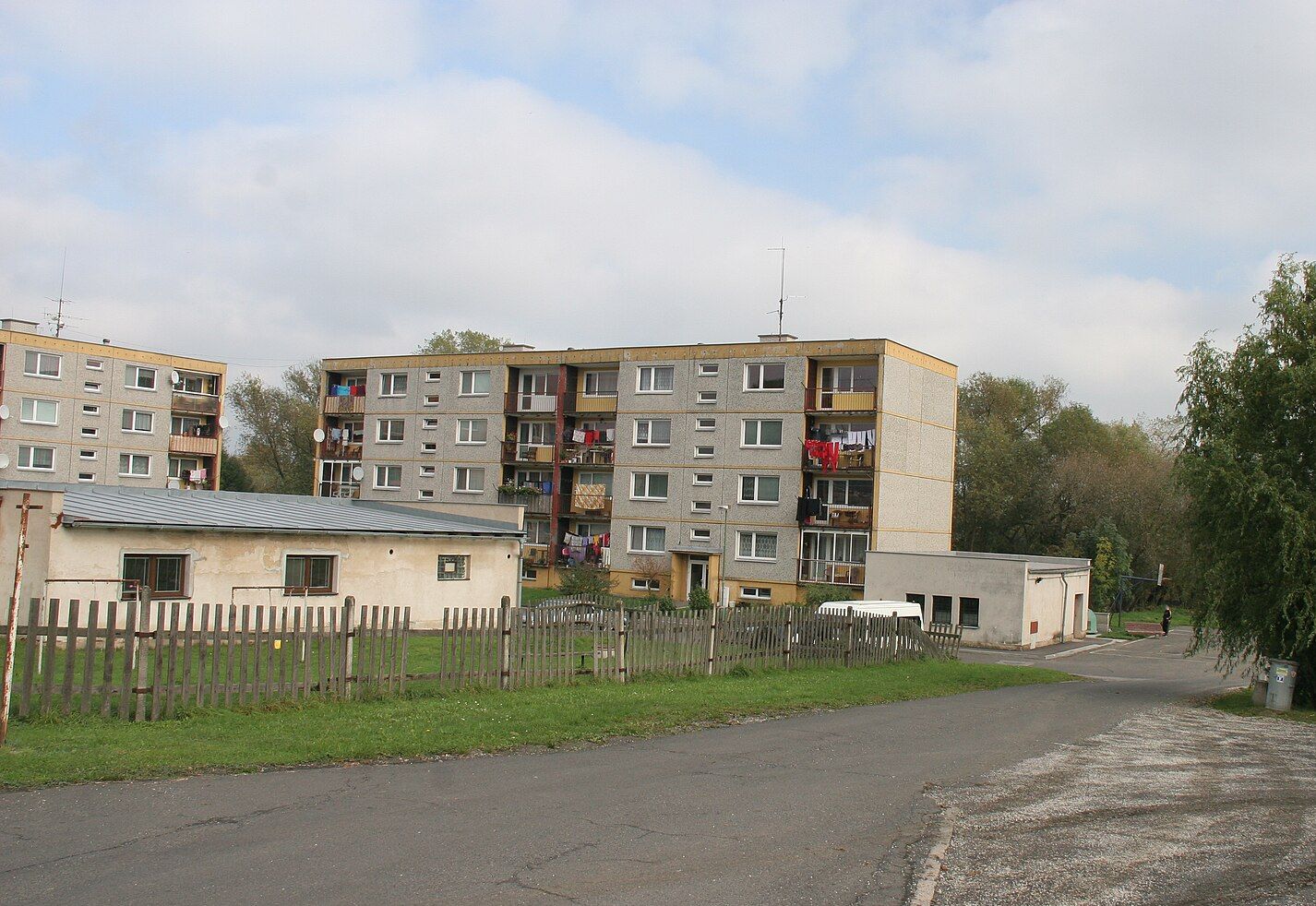
Starting a Conversation
If we want to understand what the new law would deliver, we need to look at the current Czech approach to people in acute need of housing. Given the different makeup of local populations, the attitudes of local governments in different parts of the country vary a lot. For the sake of simplicity, let us therefore stay in Liberec. Here as elsewhere, the large stock of city-owned apartments was privatized after 1989, with the city keeping less than 10 percent of the original 17,000 apartments. People in need of housing were forced to go to the private market more and more often. If, for whatever reason, you could not find appropriate housing in the private market, you could apply for a city-owned, rent-controlled apartment. These reasons included being a single mother who was rejected by landlords because of her Roma ethnicity, a senior citizen whose low pension did not allow him to pay commercial rental rates, a person with an intellectual disability, or a person burdened with asset seizures.
Each such applicant could come and have a look at a city-owned apartment, of which Liberec has some 1,270. “Often, a lot of people would show up at the apartment viewing, which would discourage those who had an interest. They felt that they stood no chance against the others, given their complicated situation,” says Martin Chochola, housing coordinator at city hall. For many people in need, simply filling out the city’s housing questionnaire properly was in itself a complicated task.
Nor was there any law forcing the city to prioritize the people who were most in need of housing. In the end, even regular middle-class people would often end up renting a city-owned apartment. “Some towns tended to offer the apartment to people in weaker social situations, others preferred people who offered some kind of gift. In this respect, Liberec was somewhere in between,” Chochola says.
Around 2017, when even politicians on the national level started talking about the need to provide housing to the most vulnerable citizens, the center-left government of the day drafted a law that would have required municipalities to provide public housing to socially vulnerable people. But the bill was rejected in parliament. “It was opposed most vehemently by the municipalities, who did not like being told by the state to have to provide something, without the state knowing their situation, opinion, and options,” Birova says. She accepts, however, that the bill was drafted in a top-down manner and the even the non-profits involved in housing matters didn’t fully grasp the needs of local governments. A similar bill proposed by the next coalition government was also rejected.
At the same time, some towns, inspired by practice in other countries, started helping out their most vulnerable citizens on their own initiative. Liberec was one.
“In 2017, people from the Platform for Social Housing came here and convinced our social officer to try the Housing First model – a program for ending homelessness by offering apartments. This opened up a wider debate on how to house the people most in need,” recalls Chochola.
One Prague district had already opened a housing contact point. In 2021, Liberec launched its own contact point – Housing Center Liberec. The idea was simple: To create a place where people in need could come, social workers could find out information about their situation, and try and match them with a vacant apartment. The city also tried to learn as much as possible about these people, with the objective of establishing who was truly most in need of housing. “From the very beginning we asked them to tell us everything. Let’s talk about whether you have asset seizure orders against you, how have you been housed for the last 10 years, do you have any health issues, do you have a history with drugs,” Chochola says. “This was the type of information that was lacking in previous years,” he adds.
Since then, 1,250 applicants have registered at the contact point, with 220 of them getting an apartment. The key to assigning apartments was the objective need of the applicant, as well as the risks of them not paying their rent, or even damaging the furnishings. If, for example, the applicant was in debt to the city, they stood no chance of getting an apartment. “We cannot help everyone but we make an effort whenever it makes sense,” says Chochola. After being interviewed at the contact point, some applicants have been advised that it would be good for them to try and keep their current housing. The contact point also has a team of assistants that help people who are already housed, working with them on expensive energy bills, disputed rental contracts, etc. The entire project is funded by the city, using EU grants.
Knock on Wood
Liberec is now facing the fact that there simply aren’t enough public housing units in the city. Although the city is trying to build new ones, progress is slow. That’s why the city has decided to try another experiment to expand the housing stock, also part of the housing bill, known as “guaranteed rental housing” and which is planned to include both city-owned and private apartments.
If an owner decides to make their apartment available to people in need, they sign a contract with the city, which undertakes the risks connected with the rental. If, for example, the tenant damages the apartment or fails to pay the rent, the city continues to pay the rent to the owner and repairs any damaged equipment, using its own funds. The city has also hired Helena Krcmarova, an experienced real estate agent, who verifies that the apartments meet certain criteria. For example, that they have a bathroom, a kitchen, and are not located in socially deprived areas. At the same time, the rent must be 20 percent lower than the rate on the commercial market.
The rental agency opened by the city in January makes agreements with individual apartment owners. The results have so far exceeded expectations: Within the first six months, 17 apartments were included in the scheme. “They include studio apartments in high-rise apartment buildings, but also apartments in local villas, often well renovated and equipped,” says Krcmarova in her office, where photos of the apartments cover a notice board. All the apartments are already occupied.
“You have a mother of two, who works as a nurse, but because she does not have a partner and because of her ethnicity, she could not get a rental contract from real estate agents,” Krcmarova says. Apartments offered within the scheme are regularly inspected by social workers. “I have to knock on wood, but so far any worries that tenants would not pay their rent, or that they would damage the apartments, have not been borne out,” she says. If a tenant is established as reliable, they can negotiate a new contract directly with the owner after the first year.
Liberec now has a renter’s contact point and a guaranteed rental scheme, and the city assists already housed people in need.
“We are running pilot projects for just about everything that’s in the bill,” says Chochola. The question might be posed why Liberec even needs the new law, if it already has the tools being introduced. Chochola says the main reason is financial. The city will no longer have to look for funds for the contact point through EU programs – this fundamental service will be covered in a more stable manner. The bill also offers financial rewards for successfully including apartments from the open market in the system. According to Chochola, the new law will also offer clear guidance on how to solve the situation of socially excluded people. “It will provide a clear framework, which has so far been missing in the Czech Republic,” he says.
Better Prospects for Affordable Housing Law
Liberec is not the only city that has already tried out tools such as the contact point or guaranteed rentals. Pilot programs have already also run in Brno, Ostrava, and Plzen. Staff of the Regional Development Ministry drew on the know-how from these pilot projects when drafting the law. The process is led by the Pirate Party, which lobbied to include the law in the government’s strategic plan.
“The law introduces a systemic approach. The state says: Do it this way. And if you’re a person with a housing problem, you will know whom to ask for help. You will no longer have to hope that you live in a town that has just happened to decide that it wants to run this kind of program,” says the ministry’s Vit Lesak. The entire system is planned to cost some 1.5 billion Czech crowns annually (60 million euros). However, experts say that at the end of the day, it should end up saving the government money.
Lesak used to head the Platform for Social Housing and advised municipalities on housing policy. He thinks the current bill is much more thought through than the previous attempts. It burdens local governments with just one task, to establish a housing contact point. The bill’s drafters consulted with officials from cities and municipalities. Even so, some municipalities still have a reserved attitude towards the bill.
“We don’t like the fact that the bill lays down a general obligation to create contact points. We fear that our budgets will not be able to provide funding for them. Also, it is already difficult to find social workers who would be working there,” says Frantisek Lukl, mayor of Kyjov and president of the Union of Towns and Municipalities. He thinks it would be better if the bill were fully voluntary, with contact points only created where local governments are interested in them. This argument, however, goes against the very principle of the law, which seeks to ensure that people in need have somewhere to turn even if their local government applies no effort to solve their housing problem. Nor will the bill significantly add to the number of public employees. Nationwide, their total number is to rise by just 125. The bill foresees that most tasks would be carried out by people who are already working for local governments.
Nevertheless, Lukl does agree that the current bill is better than the previous ones. “We do like what it’s trying to achieve. We are yet to have a meeting with [Regional Development Minister] Ivan Bartos. Hopefully, he will dispel our doubts,” he says.
The current bill is also more likely to be approved than its predecessors because it is supported by a broad political coalition.
At the same time, new tools have been created to help towns build affordable housing. The State Fund for Investment Support will be offering towns low-interest loans to build more accessible housing. The fund has already earmarked several billion crowns (tens of millions of euros) for this. Vit Lesak says there is enormous interest in the program. It is the combination of a range of other measures and broad political support, Lesak says, that can help pass the affordable housing law. “Of course, the bill might still fail in parliament. But I think that there has never been a better chance of success than right now,” Lesak says.
…
Journalist and documentary filmmaker Petr Horky is an editor at the Czech newsweekly Respekt, where this article originally appeared. Republished with permission. Translated by Matus Nemeth.
