


Even as Russia’s war scars the landscape, conservationists in southern Ukraine are reintroducing lost species to restore Europe’s largest wetland, showing how nature recovery can persist amid conflict.
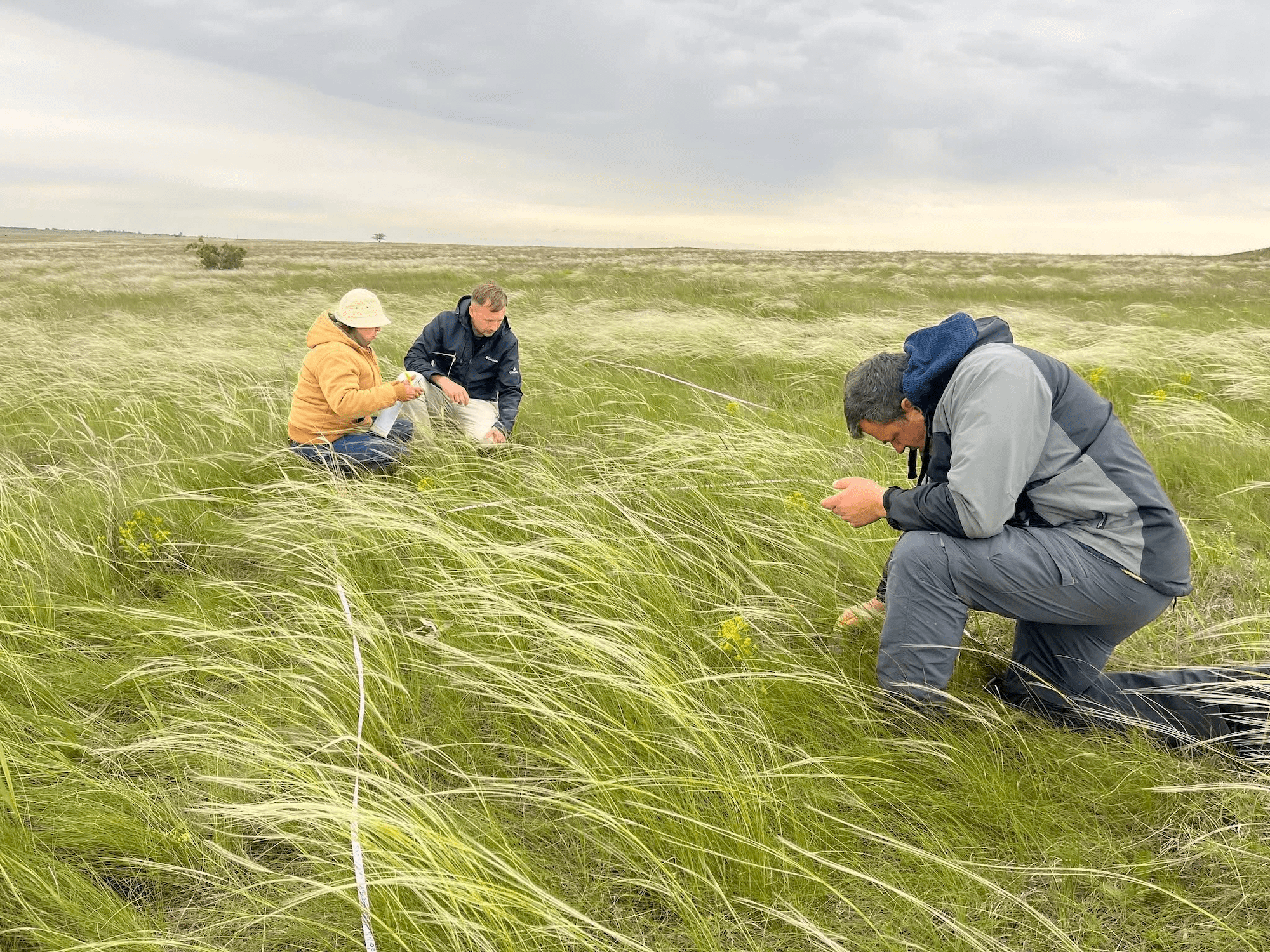
In the spring of 2022, a group of conservationists anxiously scanned the steppe in the Odesa region of Ukraine with binoculars. Tall grass swayed gently in the breeze as they watched for telltale signs – a rustle here, a ripple there. And then they saw it, a tiny Asiatic wild ass (Equus hemionus, locally known as kulan) foal, trotting alongside its mother. For the Rewilding Ukraine team who had come to see how this herd of wild asses that they had reintroduced to the steppe the previous year had fared in the punishing winter, this was quite a moment. Still unsteady on its feet, it was the first to be born in the wild in 200 years.
To a nation at war, the halting steps of one equine might seem insignificant. Odesa, especially its busy Black Sea port, has borne the brunt of Russian air and drone strikes. From the Danube Delta, 80 kilometers away, residents often see antiaircraft fire streaking through the sky and hear the sounds of distant bombs. However, for Rewilding Ukraine – a member of the umbrella organization Rewilding Europe, which has been working to restore the Danube Delta region since 2017 – revitalizing Ukraine’s part of the delta is also urgent. Europe’s largest wetland and second-largest natural delta, it is a unique and extensive mosaic of rivers, lakes, marshes, steppes, dunes, lagoons, and forests.
Human activities, war and civilian, have degraded the landscape, and over the centuries, most of the large grazers that roamed this landscape – vast herds of kulan, saiga antelope, fallow deer, and buffalo, have disappeared. “Some ecologists argue that the famous black soils we have in Ukraine and all the way to Central Asia, these are the results of thousands of years of grazing by these large, healthy grazers,” says Mykhailo Nesterenko, team leader of Rewilding Ukraine. He says that simply through their normal behavior – eating grass, nibbling on young trees, wallowing in the mud, migrating across the landscape, and pooping – these animals have shaped and maintained the ecological health of this mosaic of landscapes in the delta region.

Since 2017, Nesterenko and his colleagues have been on a mission to undo centuries of human-induced degradation of this landscape by using a low-tech, but highly efficient weapon – its native grazers. Their work seeks to achieve large-scale biological and ecological restoration, which creates the right conditions for nature to heal itself. These methods include restoring the free flow of rivers by removing dykes and dams, reducing active management of wildlife populations, and reintroducing species that have disappeared as a result of human actions. To this end, they have brought back kulan, water buffalo, Konik horses, fallow deer, and even European hamsters to the Danube Delta region, so that these keystone species, in the long run, can help create a mosaic of grassland, woodland, and wetland, which in turn supports greater biodiversity while also lowering wildfire risk.
Nesterenko, who has spent 25 years on rewilding efforts in the delta but fled when the war began, feels optimistic whenever they spot babies born in the wild. “This means that they [the rewilded species] feel good in the region and can establish themselves here,” he says. As they mate and reproduce in the wild, the animals that Nesterenko refers to as “ecosystem engineers” are helping restore the fragile, degraded landscape.
At War with Nature
On 24 February 2022, the future of this rewilding effort, and that of the delta and the steppe, was suddenly thrown into uncertainty.
“I heard the bombs very early that morning – I was listening to the American news, which was saying that war was imminent,” Nesterenko remembers. Russia had launched its full-scale invasion of Ukraine, and fighter jets were pummeling Odesa from land and sea. “We all had emergency kits, and when we heard [the bombs], it wasn’t much thinking – we just put the kits in the car and left.” Nesterenko and his family stayed a few months in Romania before moving to the Netherlands, where Rewilding Europe is headquartered.
The impact on the rewilding project was acute and immediate. Project sites were cut off, which meant that the project’s rangers could not monitor their rewilded herds or to release more as planned. “Civilians were, and are, restricted from going into the delta – not just us, but even the local authorities are not allowing their staff to visit the core areas of the biosphere reserve,” Nesterenko says. Sea mines laid by both the Ukrainian and Russian militaries can drift to the area’s shores and creeks, and some mines have exploded inside rewilding areas, igniting fires in dry woodland habitats.
This has posed considerable challenges not just in the delta and nearby Tarutino Steppe, but across the country. In March 2022, Russia occupied one of Ukraine’s oldest and most significant biosphere reserves, Askania-Nova. Its steppes, home to successfully rewilded Przewalski’s horses and introduced grazers such as zebras, were reclassified as hunting grounds, undoing decades of conservation efforts.
Unsurprisingly, this brought the fledgling ecotourism sector in these areas to a halt. This was an essential aspect of Rewilding Ukraine’s strategy of providing local residents of the Danube Delta with an economic incentive to rewild and conserve their landscape. In the first months of 2022, visits to the Romanian side of the delta fell by roughly 25%, while the Ukrainian side remained mostly out of bounds.
Yet, Nesterenko says there is reason for cautious optimism. Restricted human activity as a result of the conflict may have actually helped their rewilding effort. Since 2019, the organization has restored seven wetlands covering more than 18,000 hectares and reconnected 20 kilometers of river networks in the Danube Delta. “We’re seeing that the water quality is back, the fish stocks are recovering,” Nesterenko says. In the upper delta, the restoration of Kartal Lake has helped reopen fish migration routes between floodplains and the Danube. This has allowed native fish like sturgeon to return, while previously stocked exotic species have declined.
To Restore a Grassland, Bring Back the Grazers!
Rewilding Ukraine has restored 600 hectares of formerly ploughed grassland in the Tarutino Steppe and has found that returning long-lost species of grazers is aiding their objective. The kulan now number about 35 by rangers’ estimates and have now spread out over 40,000 hectares. In addition to the kulan, they have introduced other large herbivores: 63 Konik horses, 20 red deer, 30 fallow deer, 20 water buffalo, and 10 Hucul horses.
David Thomas is the director of the project’s funding partner, the Endangered Landscapes & Seascapes Program (ELSP) of the UK-based Cambridge Conservation Initiative. “This project is really about reconnecting those disconnected parts of the ecosystem, restoring ecosystem processes and bringing back nature,” he says. When these reintroduced grazing species graze on dry foliage and young trees that could take over and overwhelm the steppe’s natural grasses, it has several impacts. “We’ve seen that these animals increase the variety and the diversity of plants,” Nesterenko says.
ELSP’s satellite images show that reintroducing water buffalo and Konik horses across the outer delta has indeed reduced dense vegetation as it has boosted plant diversity.
ELSP and Rewilding Ukraine have found that grasslands with large and diverse grazing species like donkeys, horses, and buffalo deposit twice as much carbon compared to areas where no large grazers are present. Their research bears this out, and also finds that soils under natural grazing potentially face lower fire risk than ungrazed or ploughed land. This is crucial at a time when fire is a bigger threat than before – not only because of climate change but also from stray bombs and landmines.
In August 2025, local volunteer Petro Hramatik of the Odesa region village Vesela Dolyna observed that wildfires occurred every day, with dry grass acting like kindling. He was the village head (starosta) from 2020 to 2024, and saw that the presence of kulan and other grazers “helps reduce excessive dry vegetation, creates more diverse plant structures, and opens up space for different species to return.”
“An Investment in the Future”
Hramatik lives near the steppe, and helps monitor the kulan and other species there. “I feel deeply connected to this landscape,” he says, adding that rewilding is not just a project but a shared responsibility for the future of the land. He is part of a growing community of people, living in isolated villages in Ukraine, who are coming around to the idea that restoring their land is linked to their own well-being.
Before the war began, Rewilding Ukraine had started helping develop local eco-tourism activities and small businesses. When hostilities cease, Nesterenko hopes that nature-based tourism will generate new jobs in the local area and support traditional forms of farming based on grazing and haymaking. To this end, his team is presently conducting workshops, community council sessions, and public hearings to keep local residents engaged with conservation even during wartime.
Fears of further war destruction remain. In 2023, the State Water Resources Agency of Ukraine documented the catastrophic impact of the destruction of a huge dam in the Russian-controlled Kherson region in southern Ukraine. It prompted accusations of ecocide against Russia.
Meanwhile, in 2025, Rewilding Ukraine’s Nature for Veterans initiative invited Ukrainian soldiers and their families to experience the rewilded landscape of the Danube Delta and even help build artificial nesting platforms for pelicans. Thomas says that the sight of nature healing itself, as it is doing in the Danube Delta, has the potential to help with PTSD and other psychological conditions caused by war. Once peace returns, he says, “people will need such places where they can be at peace with nature.”
“What we do is an investment into the future,” Nesterenko says. “Our rewilding efforts in the Danube Delta show that Ukraine’s nature is as resilient as the Ukrainian people, and the two depend on each other. I am confident that both will recover when the war ends.”
Geetanjali Krishna is a journalist reporting on the environment, climate change, and global health. She co-founded The India Story Agency, a cross-border reporting partnership, in 2020. She was a Solutions Journalism Accelerator grantee in 2024; one of 10 journalists chosen for the Solutions Journalism Network’s LEDE fellowship in 2023; and an awardee of the European Journalism Center’s Global Health Security Grant 2021. Her recent bylines can be found in The British Medical Journal, Reasons to be Cheerful, bioGraphic, BBC Future, and Asia Democracy Chronicles.


