


A report from Ukrainian cities near the front lines, where people are starting families even after four years of war. From Respekt.
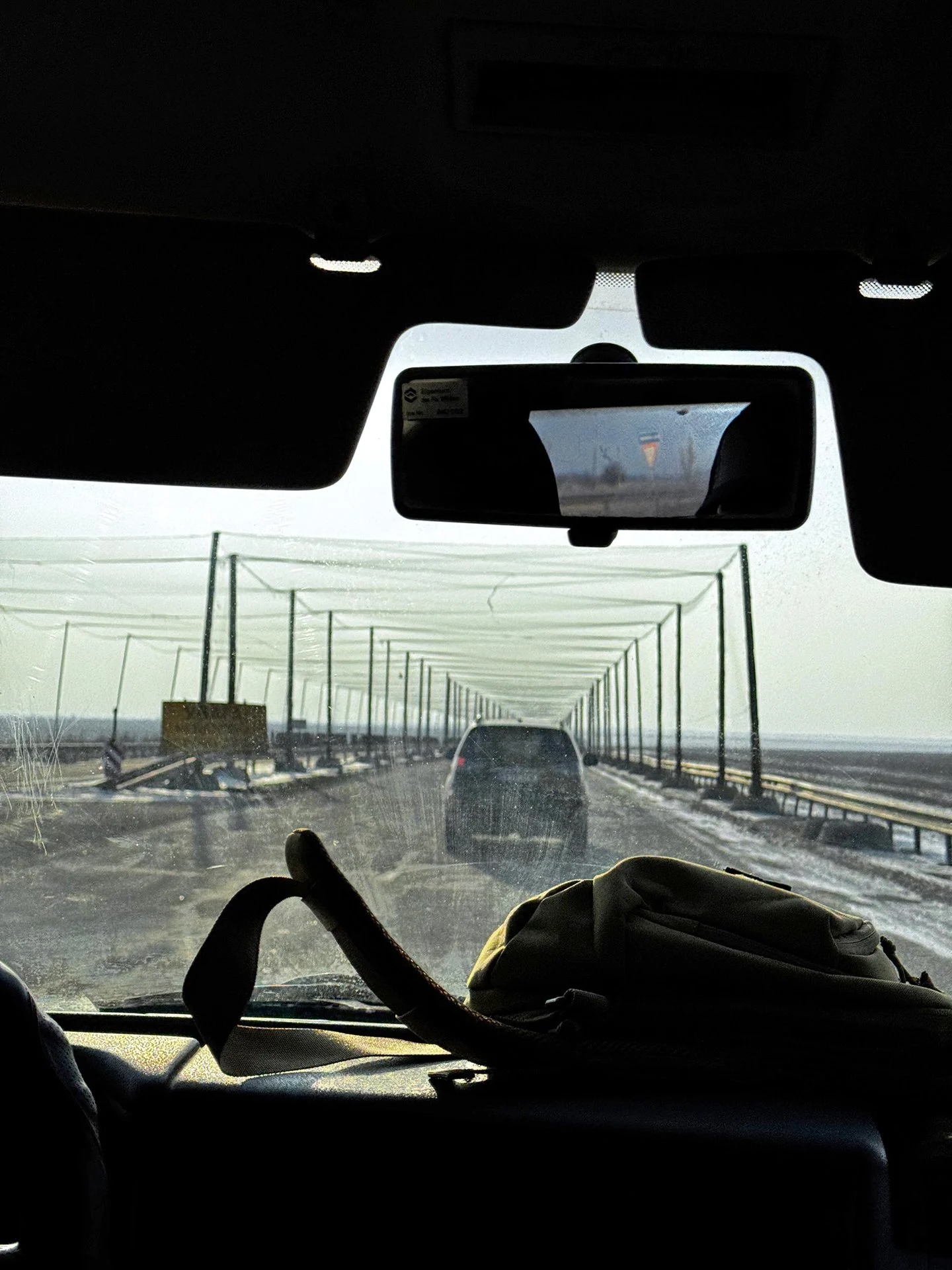
Kherson is a city that rumbles and shakes. This is due to the hundreds of shells and drones that rain down on the local houses and streets every day from the Russian side across the river. Every day, on average, one person is killed and seven are wounded, and these are no mere scrapes – shrapnel lacerates arms and tears out internal organs. The road connecting Kherson to the outside world is covered with anti-drone nets for the last 17 kilometers, because trying to leave here is just as dangerous as staying. This is what the place where four-year-old Dobromyr Revenko is spending his happy childhood looks like.
Through the eyes of the little boy, who spends a freezing January bundled up in a snowsuit running errands with his mother Alyona, the picture described above is certainly not quite so bleak. He has never gone to preschool – those in the city aren’t operating due to shelling, with a few exceptions – but sometimes he meets another child on the playground or in the park, and when it clicks – when they get along and aren’t interrupted by a nearby explosion – they have a good time playing.
His mother is the head of a local theater’s literary and dramaturgical department. Her job also brings interesting encounters, and the Kherson underground theater offers plenty of nooks and crannies to explore. “We think that despite all of this, he’s mentally doing fine,” says Alyona. Last Christmas, he asked for a rifle “so he could shoot down drones,” but Alyona and her husband Viktor see this as a healthy part of his perceptive view of the world around him. And right now, it looks like a rifle for drones is actually a pretty smart wish.
The only thing that could drive their family from their home in Kherson is if the omnipresent explosions, anxiety, fear, alarms, and death began to take a serious toll on Dobromyr. But the parents don’t think it’s come to that yet. “This is our piece of land. No one can just come here and tell us to get out, saying it’s theirs. This is our home, and we’re not leaving,” Alyona says, explaining to us why, amid another round of explosions, she’s staying in the shelled city.

The parents of the other 6,000 children living in Kherson today have their reasons, too. And so do the parents of tens of thousands of small children across southern and eastern Ukraine, whose families have decided to stay even at the cost of their children growing up within sight of the front lines.
Perhaps the Other Bank Will Be Ours
Dobromyr was born in January 2022, a month before Russia invaded Ukraine. Kherson was occupied almost immediately after the invasion, and Alyona’s family spent the first seven months of the occupation there. Then they managed to leave – but as soon as the city was liberated in November 2022, they returned immediately. “It’s our way of fighting. The Russians aren’t currently able to capture the city, so they’re trying to take it another way – by shelling it to drive out its residents. And we’re making that impossible for them,” Alyona says.
Whenever possible, Alyona takes her only son with her to work meetings at the underground theater, which, though it hosts cultural events less frequently than before the war, still does so. “Any socialization is good,” she says. The drive to work is a gamble, and they’ve already had to outrun a drone with their car several times. Viktor, who works as a firefighter and paramedic, heads out to help those who weren’t able to escape the drones. Last year, a shell struck the nine-story apartment building where the family lives. Their relatively safe, second-floor apartment weathered the attack without major damage; the shell destroyed the apartments on the top floor. But even this didn’t shake their determination to lead a completely normal life.
“A while back, we bought our son a drum; he makes a terrible racket with it and really enjoys it. Whenever I can, I take him out to the park – he can’t stay cooped up inside all the time,” Alyona explains. But it’s necessary to watch one’s step carefully. Small, inconspicuous landmines and unexploded ordnance are sometimes scattered across the streets and lawns. Anyone who picks them up could lose their life. The parents try to substitute kindergarten with a set of educational flashcards featuring various tasks to solve, and they also teach Dobromyr English at home.
Outwardly, Alyona doesn’t show her nervousness in front of her son and doesn’t visibly react to the regular explosions outside the window. Sometimes she takes him to cafes or restaurants that the Russians haven’t destroyed yet. There, Dobromyr can see “normal life” – groups of people together, having fun, laughing, or arguing. If they’re lucky, Dobromyr might even run into another child of his age there. “If we’re okay, our son will be okay too,” says Alyona.
Of course, she has her doubts. He’s been used to explosions and sirens since he was a baby; he used to fall asleep to them without a care in the world. And she’s still not sure if he understands what all those sounds actually mean. Sometimes nothing fazes him; other times he gets terribly scared out on the street. Right now, he doesn’t spend any time outside on his own, not even in the courtyard of their apartment building, but hopefully, in time, they’ll be able to count on him to recognize danger and stop playing when explosions start getting closer or when a drone begins circling overhead.
But that’s a question for the future, and Dobromyr’s parents aren’t planning much for it. The boy is supposed to start school in two years; that will be another important milestone when they’ll have to decide what to do next. “Maybe by then the other bank of the Dnipro, which is currently occupied by the Russians, will be under our control again, and it will be safe to go to school here,” Alyona muses. However, the course of the war doesn’t suggest that will happen, so what will they do if it doesn’t? Will they switch to online classes? “Maybe. Or we’ll drive Dobromyr to school in neighboring Mykolaiv – it’s an hour’s drive from here. We’ll see.”
Getting a Good Night’s Sleep
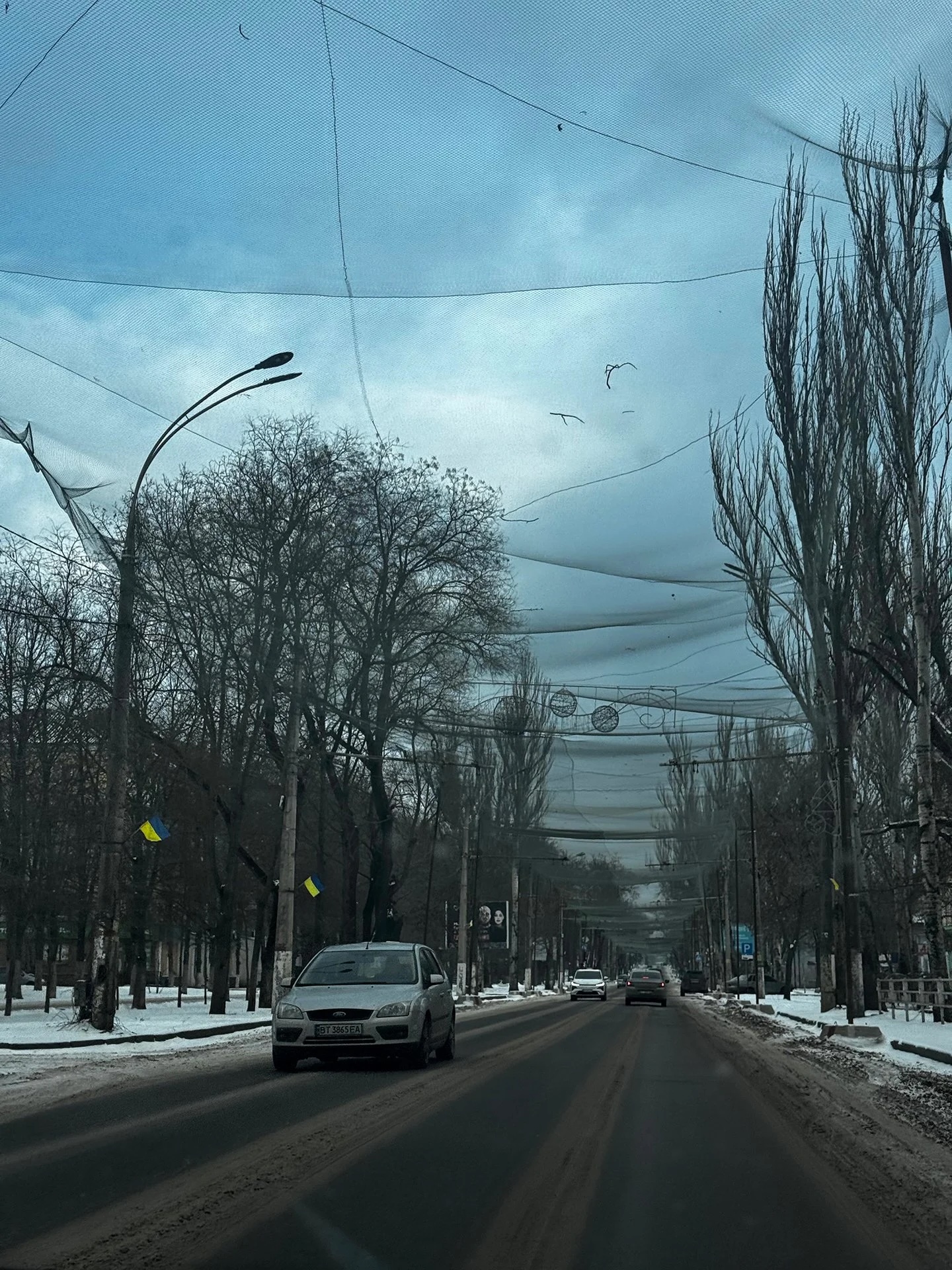
When we visited Kherson last April, drones were already flying over the city and killing people. However, the roads leading in and out of the city were not yet covered by anti-drone nets. A lot has changed since then: there are more Russian drones, they are more technically advanced, and they can fly farther. Surviving them has thus become more of a risk, and the nets are meant to at least help the locals a little. In the city itself, only some roads are protected; there is a lack of both funds and personnel to install the nets citywide.
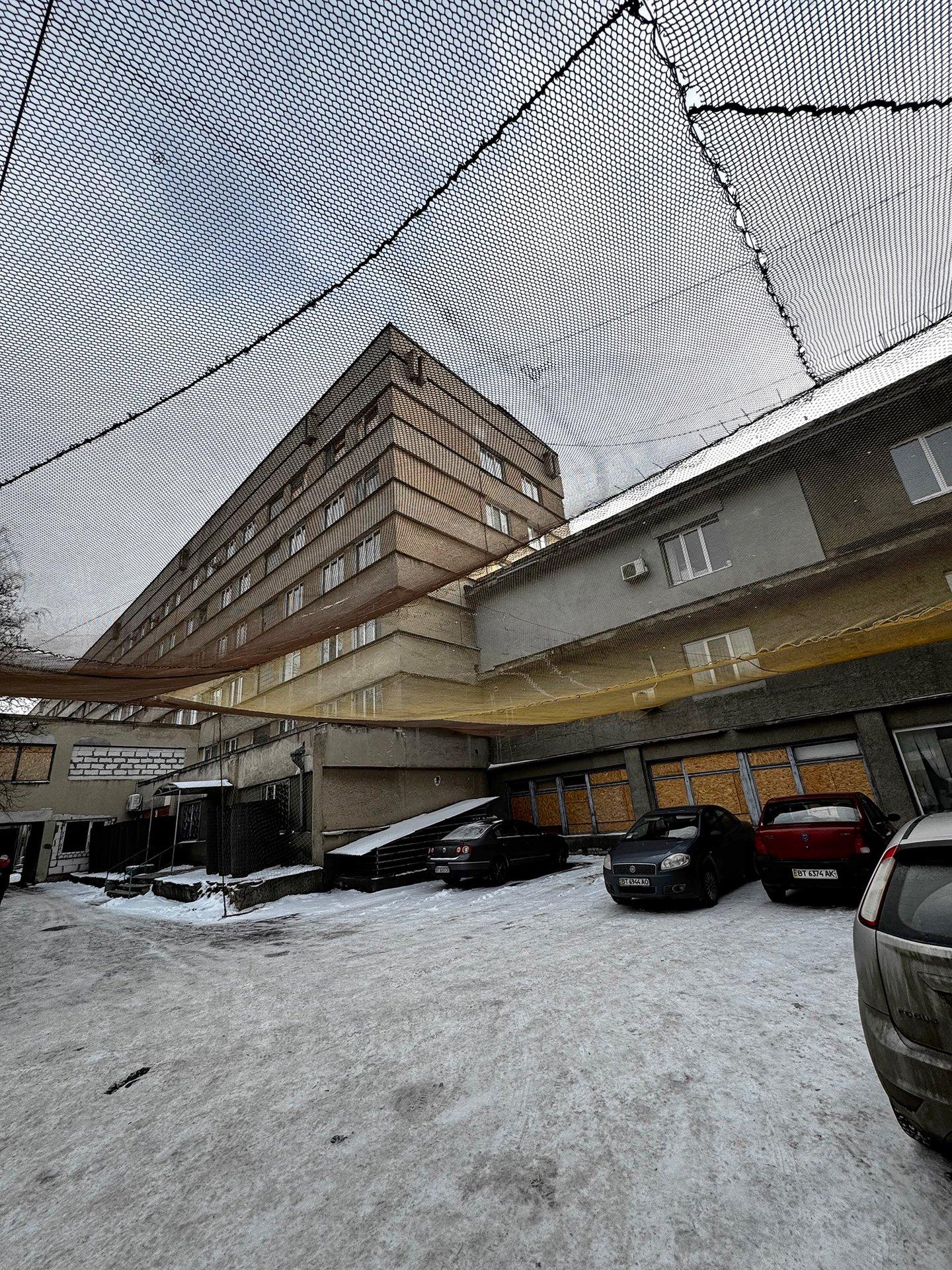
Only the main roads or those that are particularly dangerous – running close to the river and thus to the Russian positions on the opposite bank of the Dnipro, where the Ukrainians pushed the enemy back in the first year of the war – pass through the tunnel of nets. Beryslav Avenue meets both criteria. We try to drive through it as quickly as possible, passing two charred car wrecks (one of which municipal services are pragmatically using as a base to attach protective nets), and after turning, we stop at the Regional Children’s Hospital. It is the largest children’s hospital in the city, one of only two still operating, and this place, too, contributes significantly to ensuring that new life can continue in Kherson. One of its rooms in particular.
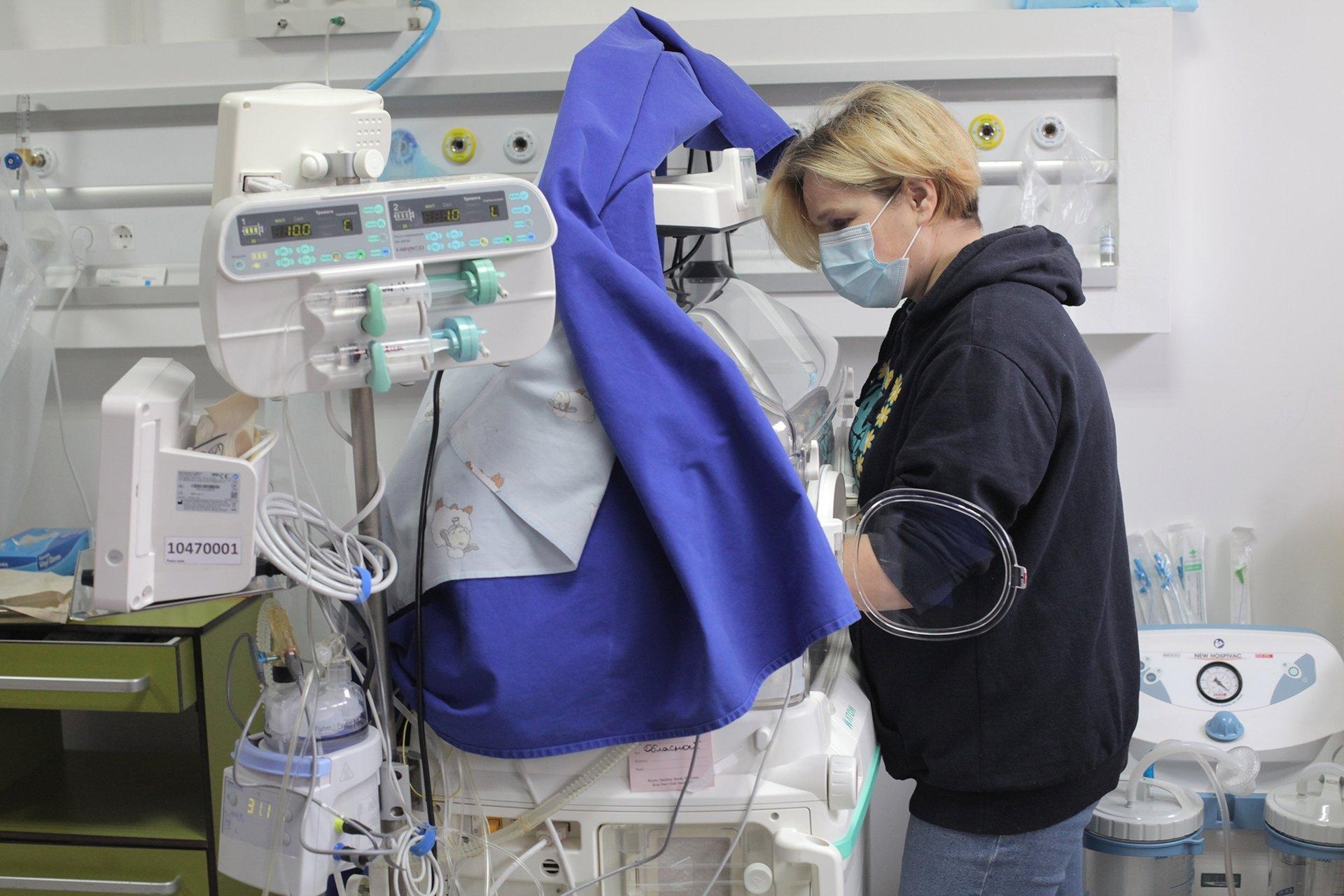
In Ukraine, they say that if a branch of the Nova postal service – which strives to deliver essential items, including clothing and food, to people until the very last moment – disappears from a city, the war has definitely swallowed it up. Conversely, if anything can signal that a city is far from giving up on its future, it is the presence of a neonatal intensive care unit. This one is on the second floor of the Children’s Hospital. Five tiny patients lie here in cribs with vital sign monitors: one with blood poisoning, two premature babies, and one crib is being prepared for a premature baby who is due to be born any moment and will weigh a mere half a kilogram.
The ward is protected from shelling because the staff moved it to rooms facing away from the river; even so, two-thirds of the windows are covered with wooden boards. The Russians have bombed the hospital several times, but so far they have never managed to cause damage that would put it out of commission. Before the war, 300,000 people lived in Kherson, where 3,000 babies were born each year; today, just over 200 children are born annually to the city’s wartime population of 60,000. Last year, 40 of them passed through this special care unit, and in the first two weeks of this year, eight more.
“Mothers’ stress. Air filled with fumes from explosions. All of this means more children with complications,” say the duty nurses – the ones who have kept the facility running.
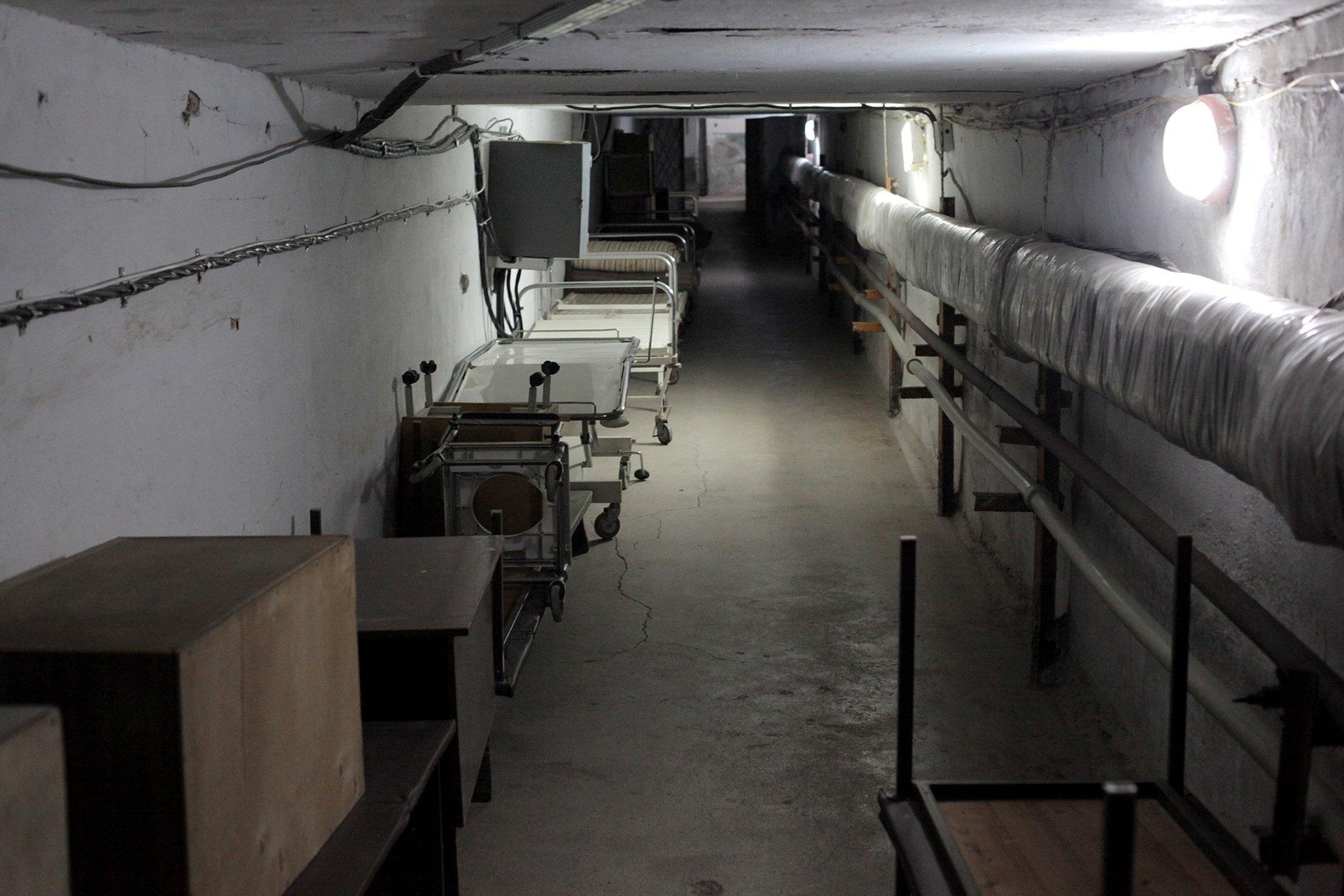
Even the hospital has emptied out to some degree; 500 people work here now, a quarter of the original staff. Right now, in mid-January, there are 90 children hospitalized here. At night, all the child patients are moved underground. A few meters below the surface is a windowless world, where there is no risk of direct hits from shells or shrapnel, and the sounds of fighting from outside do not reach them.
“The main reason we move the hospital here every night is so the children can sleep peacefully, without being constantly woken by the shelling. A good night’s sleep is essential for their recovery,” says Stanislav Vasylovych Bumbu, the hospital’s deputy director.
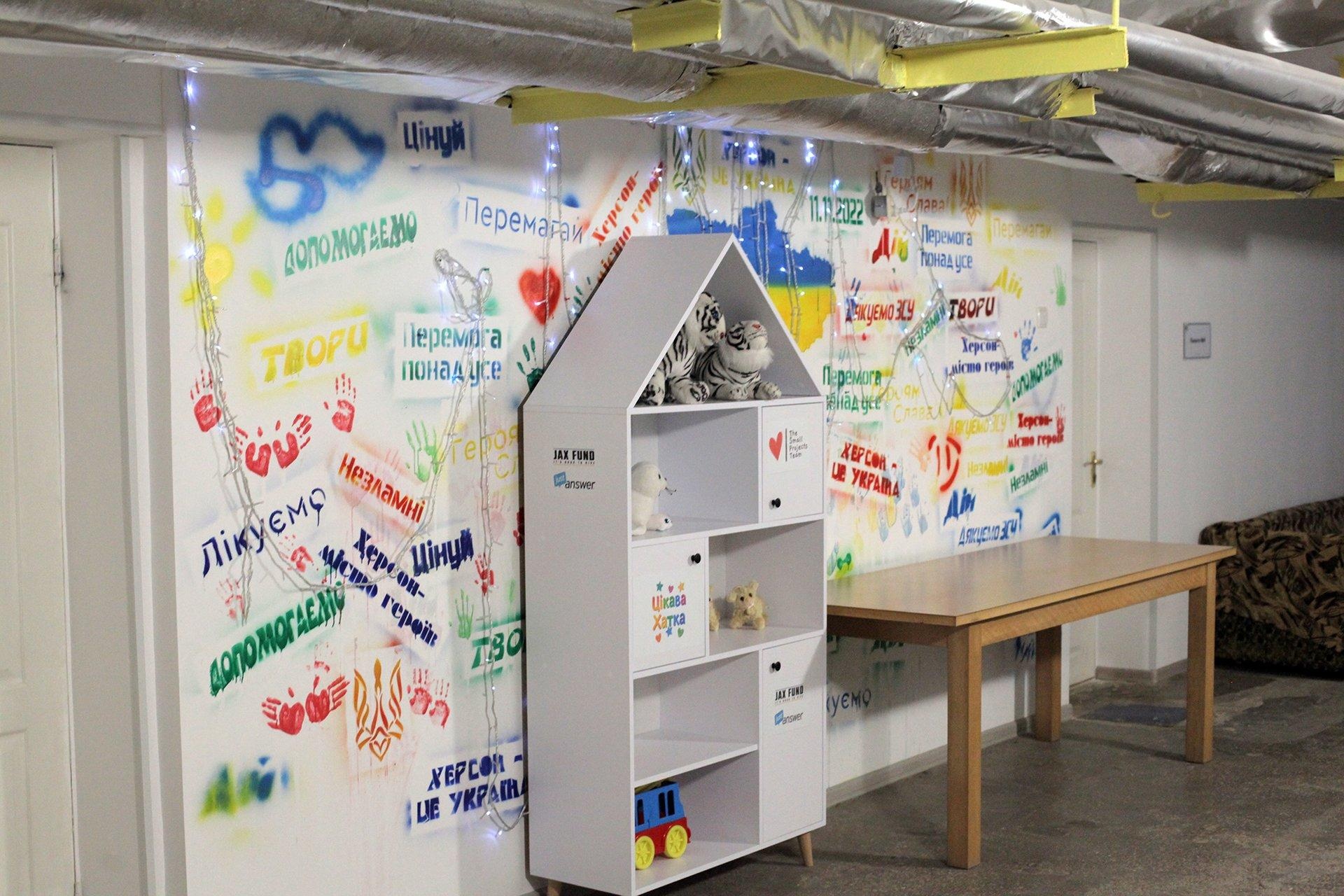
The underground hospital is fully equipped with beds, medical devices, heat, and light; in an emergency, the children could stay here for weeks. Those who don’t want to just lie in bed can entertain themselves by hopping on a hopscotch grid drawn on the concrete floor. Or they can reach for the stuffed animals in the cabinet – there are two tigers and two dogs, a mother seal with her pup, and a bear. Pinned to the wall next to them is a Ukrainian flag surrounded by various slogans reflecting what parents and their children feel, are experiencing, or wish for: We Will Win, Kherson Is a Hero City, Let’s Help Each Other, Kherson Is Ukraine, We Are Unbreakable, Thank You.
Don’t Let Them Peek Out
A lot is happening underground in Kherson today. We’re sitting below ground in a children’s center set up in what used to be a high school, along with Maryna Navrocka and her third child, two-and-a-half-year-old Mark, who’s dozing on her lap. Maryna’s daughter is currently taking a modern dance class here; the explosions outside sometimes fall in time with the rhythm, sometimes they don’t. But it’s safe here. Her son is playing soccer right now; it’s snowing and freezing cold, so for once they’re indoors, but in his case, practices usually take place outside. Besides cheering on their kids and shouting at the coach, the parents keep their eyes glued to the sky and Telegram channels to spot any approaching drone threats in time.
Maryna, her husband, and their children lived through the entire occupation in Kherson and could hardly believe that liberation was real. They headed out to the square with everyone else, and Maryna gave away a significant portion of her shop’s inventory of honey and beeswax products to Ukrainian soldiers. There was also quite a bit of drinking that first evening of restored freedom. Maryna felt sick the next morning, but not from a hangover – she had discovered she was expecting a baby.
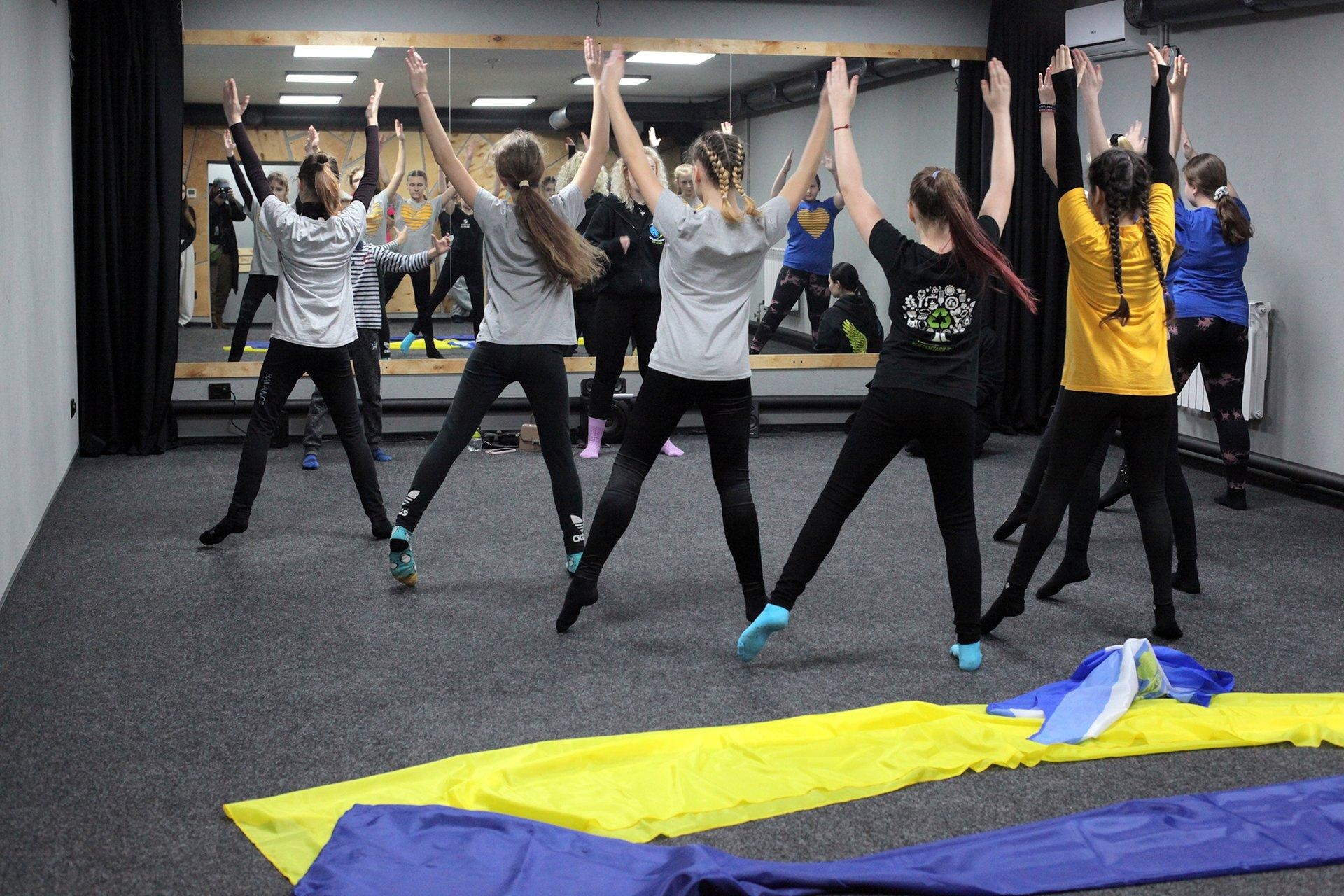
“For the first few weeks after I found out I was pregnant, I didn’t leave the house; I didn’t go into town at all. I was terribly afraid of everything,” she recalls. But in the end, she stayed there with her family, and she gave birth to Mark in Kherson. Today, this woman – who seems cheerful at first glance – is still afraid, but her fear looks different now. “I try to pack the kids’ days with some kind of after-school activity so they can be around others, and most importantly, so they’re not constantly staring at their phones,” she says.
Mark attends one of the few local children’s groups housed underground. That means a lot of driving around town, which poses a constant, significant risk. But Maryna’s determination not to leave here – her home – and the bees they keep in hives outside the city is clearly unshakable. She just waves her hand at the list of cities in western Ukraine they could move to – after all, she and her husband aren’t exactly poor and they’re enterprising. “But,” she says, “they aren’t such good people there as in Kherson. We belong here.”
Simply Roots
The determination to stay at the front with their children – as demonstrated by theater artist Alyona, beekeeping entrepreneur Maryna, or the mother who, at the Regional Children’s Hospital, strokes her tiny daughter through the holes in the incubator – does not find widespread understanding among Kherson’s residents. Our city guide Denis considers it too great a risk; Oleksandr Prokudin, head of the Kherson military administration, tells us that “in most cases, people refuse to evacuate out of fear of the unknown.”
“They’re afraid to start a new life in a new place; they don’t want to leave their homes, jobs, and surroundings – despite the constant danger. The Russians don’t care whom they kill. They deliberately target children; last year alone, six were killed and 62 wounded in the Kherson region,” Prokudin says.
He, too, would not raise his children here: “I’ll be honest: as a father, I would never allow my children to live under constant shelling.”
Natalya Novak sympathizes with parents with children in the most dangerous parts of the country. She herself lives in a similar place, though on the opposite end of Ukraine, in the northern city of Sumy. This city of a quarter of a million people does not suffer as much as Kherson; it is not within range of artillery shells, as it is 30 kilometers from the Russian border. But that “relief” from the roar of artillery means daily drone attacks and nearly daily strikes by guided bombs.
Two roads lead here from the interior, and even here, drivers are occasionally attacked by suicide drones. Pine forests gradually give way to oil fields; 15 kilometers from Sumy, on the Ukrainian side, soldiers are building new fortifications in case the Russians eventually advance deeper into Ukrainian territory. In the summer of 2024, not far from here, the Ukrainian army launched an incursion into Russia, holding out on Russian territory for months before being pushed back.
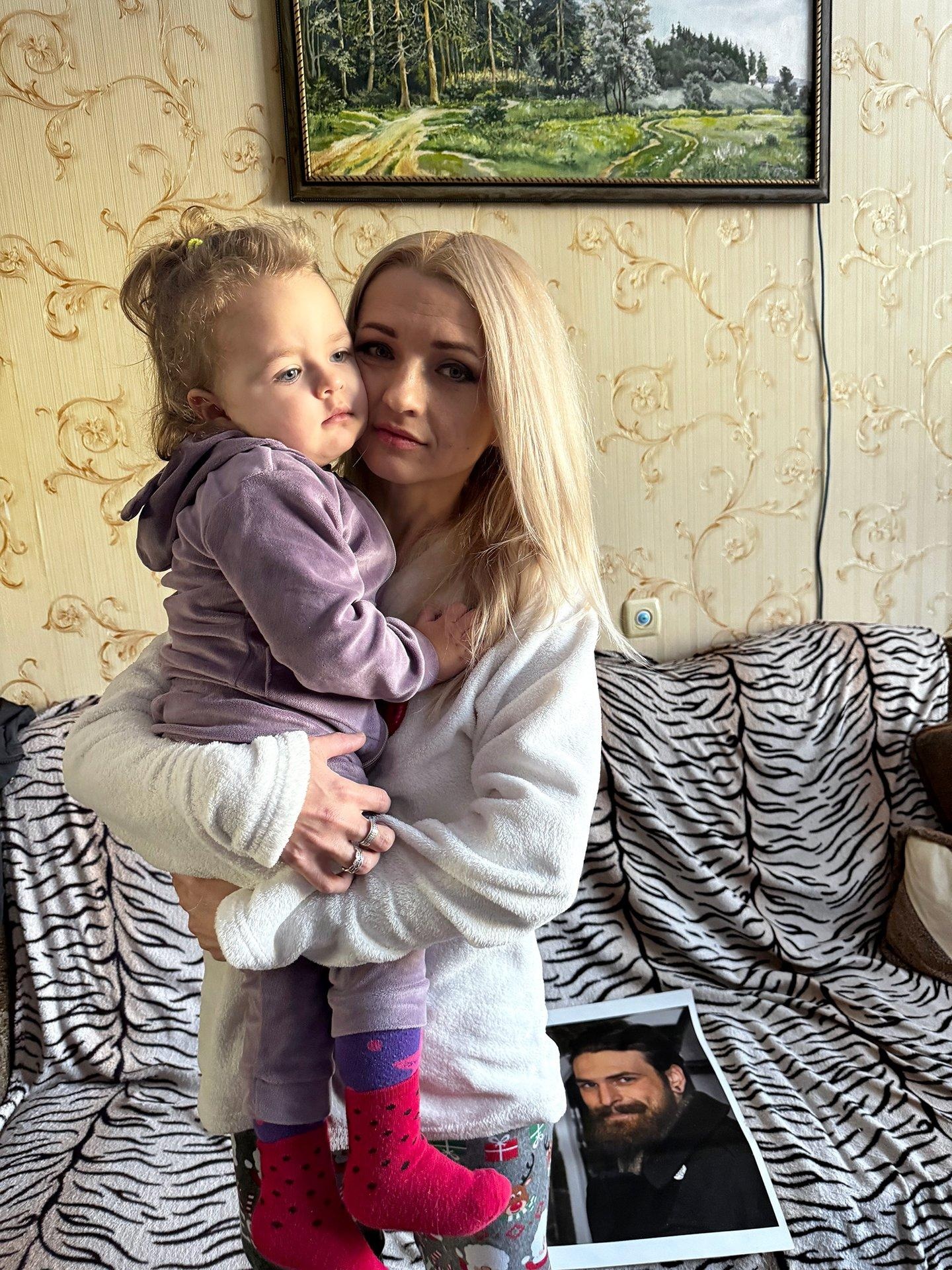
Natalya should have every reason to leave. Her partner, Dmytro, a well-known Sumy mime and juggler, volunteered for military service at the start of the war and was killed in action two years ago. Natalya was three months pregnant with Mariya, who is now looking at us thoughtfully from the sofa. Her older sister, nine-year-old Sofiya, is at her grandmother’s for online classes. Sofiya lost one of her friends last year. The girl lived in the apartment building across the street; their apartment was hit directly by a drone, her mother died, and her severely maimed friend moved in with relatives in the city of Dnipro, 350 kilometers away, for several months of rehabilitation.
Natalya, who “couldn’t see the point in anything” after Dmytro’s death and sank into depression, is kept afloat by her daughters, her job at the local environmental inspection office, and therapy sessions twice a week. “Anything else would be harder for me than staying here. I have roots here – and I mean that literally – I couldn’t live anywhere else but here on this patch of land,” Natalya tells us in her apartment as she flips through photos of her late husband. “Dmytro died defending this land. Others are continuing the fight. But if the rest of us leave, who will our defenders be defending, and why?”
When Natalya is at work, one of Mariya’s grandmothers always looks after the little girl. Daycare centers and various private playgroups in Sumy are managing to function, and with a little luck and effort, a spot for her will eventually open up at one of the underground kindergartens. Sofiya is already responsible; on nice days, she can play on her own with friends in the courtyard of their apartment building – she knows that as soon as the siren sounds, she needs to run to the shelter in the common hallway. That’s the safest place; their apartment buildings don’t have real bomb shelters. “But she’s losing friends all the time; there are fewer and fewer children in the city,” Natalya sighs. “I can’t wait – I’m longing for it so much – for normal life to return to Sumy.”
The Children Are Leaving
Children are disappearing from Sumy, but the adults are not. Unlike in Kherson, locals here feel somewhat safer; those who have left have been replaced by residents of nearby towns and villages closer to the Russian border, where life has become impossible due to the war. Among them, however, there are more older people. People of working age, mainly women, are leaving for the west of the country or directly abroad, taking their children with them – and giving birth to new ones in greater safety.

They’ve got it all figured out on Trinity Street. This is where where Sumy’s main, still-operating maternity hospital is located. Most people in Sumy were born right here, in a building that will celebrate its 100th anniversary next year. Before the war, around 2,000 children were born here every year; last year, it was half that number. This year is off to a good start – the first baby girl was born eight minutes after midnight on New Year’s Day – but demographics and migration are relentless forces. The number of births will likely exceed a thousand this year as well, but that’s mainly because women from more dangerous parts of the region are coming to Sumy to give birth – either because the maternity hospitals there have closed or because they want to give birth in a calmer environment.
In Sumy, they left nothing to chance. After the initial shock of the invasion – Russian troops marched through the region toward Kyiv, occupied several cities for a few weeks, and surrounded Sumy itself, but withdrew across the border in April 2022 – the hospital administration sprang into action. Within six months, the maternity ward had completely moved underground, where there had previously been only unused cellars. Above ground, only administrative and paperwork tasks are now carried out. After three and a half years underground, any hint of improvisation or incompleteness has vanished; it is a smooth wartime operation.
This may be necessary, as analysts often mention Sumy as a place where the Russians might attempt a surprise attack in the future. But right now, the city doesn’t look like that; it’s just bidding us farewell with a massive explosion from a guided bomb, which destroyed a small gas station on the outskirts and slightly injured the driver of a truck parked nearby.
Two hundred kilometers away, in Kharkiv, little Artem was born a week ago, and his mother, Natalya, is convinced he’ll become a lawyer – just like her. Dima was also born a few days ago, and his parents, Bohdan and Yevheniya, aren’t holding back – they say their son is headed for the presidency. Wherever they may go, both boys will certainly set out on their life journeys from their hometown of Kharkiv. “Kharkiv is in our hearts; it’s the best city,” says Bohdan, and Yevheniya nods in agreement.
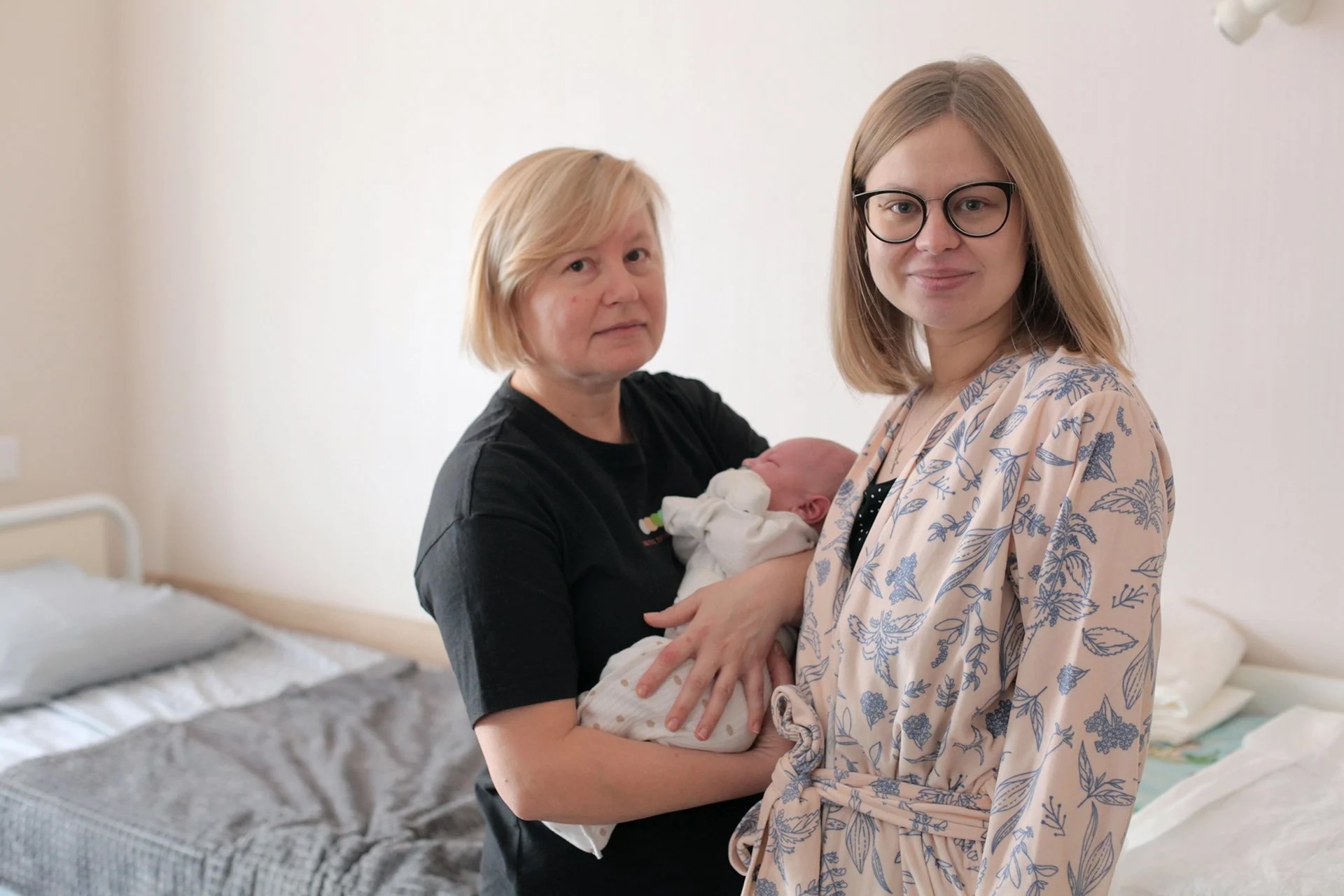

Even this largest city in eastern Ukraine is not far from the Russian border – just 30 kilometers – and one of Kharkiv’s four functioning maternity hospitals has also set up an underground delivery room, though for now they are trying to deliver babies above ground. Unlike Sumy, Kharkiv experienced two months of intense shelling at the start of the war. After the Ukrainian army pushed the Russians out of the city’s outskirts, people began to feel safer here and are reluctant to give up their prewar way of life, which includes giving birth in daylight.
Fewer babies are being born here now, says Oksana Lipko, head of the regional maternity hospital.Forty babies are born here every month, and mothers still come here from far away. Before the war, there were a hundred – and the vast majority were from Kharkiv.
When Russian forces were still in the immediate vicinity of Kharkiv in March and April 2022, the staff of the maternity hospital barricaded themselves inside for two months – none of the doctors or nurses went home due to the ever-present danger. So they slept at work, volunteers brought them food, and the staff only ventured outside the hospital walls in ambulances, on breakneck and dangerous journeys to help women giving birth in emergency situations.
“But so far, nothing has hit us during the entire war, thank God,” adds Oksana. For now, they’ve made do with replacing the glass window panes in the delivery room with plastic, which won’t send a dangerous shower of shards flying inside if they break. And by maintaining underground storage areas with a three-day supply of medicine, food, and drinking water.
And they have been just as fortunate at theRegional Children’s Hospitalon the outskirts of town. The hospital specializes in treating children with health issues and serves as a refuge for people from towns where the war has made it impossible to operate similar facilities. “We have children here from Vovchansk, which the Russians destroyed, as well as from nearby Kupiansk and the Donbas,” says Dr. Anhelina Solovyova. As long as it is possible – and hopefully it will continue to be so – she says they will help anyone from the wider region who needs it.
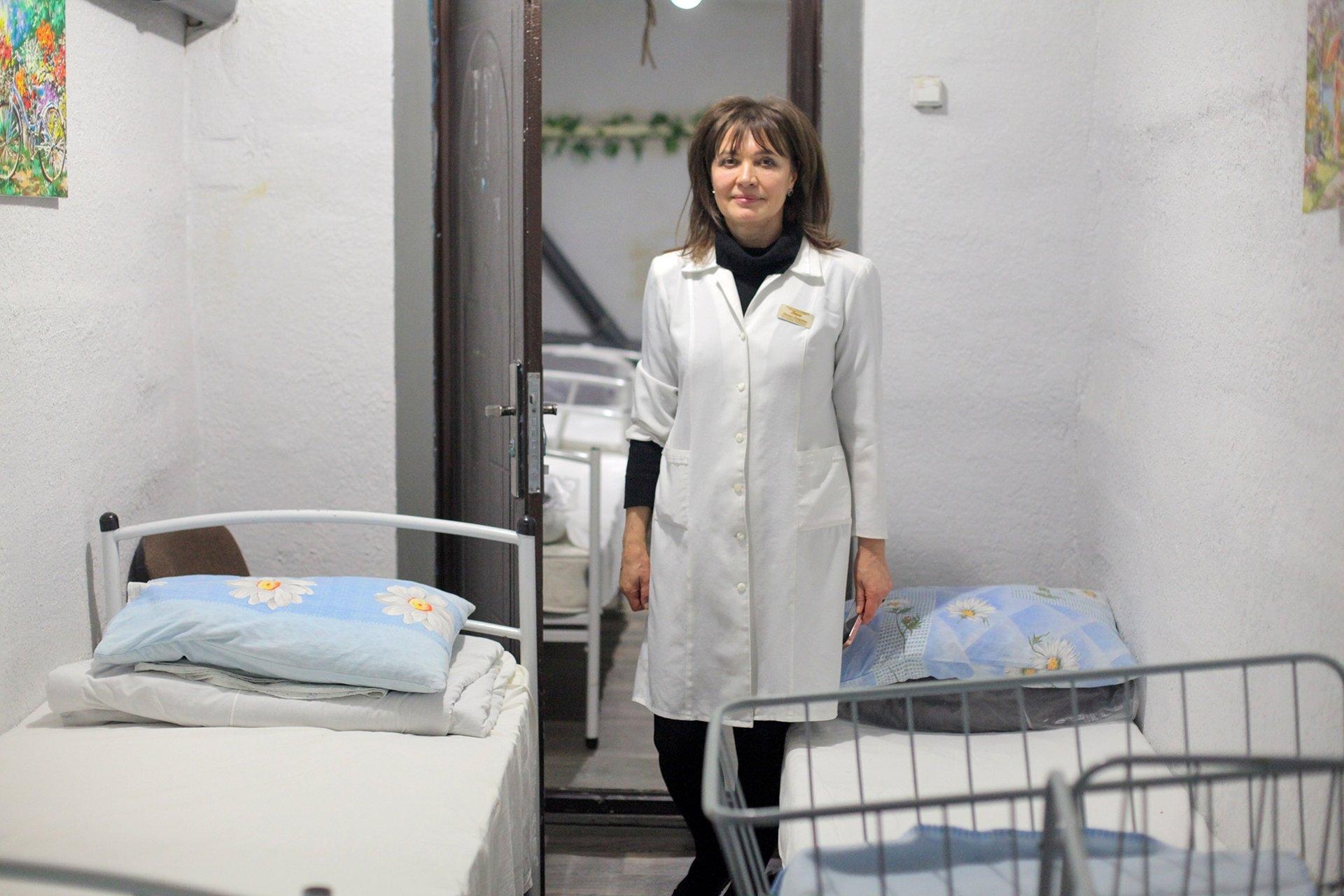
That children have top priority here is also evident in the ubiquitous blueberry color. The calendar in Dr. Solovyova’s office is blueberry-colored, as are the portraits of children in the hallways, the radiators, and the support columns. “It’s the color of life, similar to the color of the light in the incubators where we care for the children,” the doctor explains.
The Importance of Faith
Kharkiv, Ukraine’s second-largest city, remains an attractive target for Russian forces. In addition to drones and bombs, the city now faces a constant threat from ballistic missiles – there is no escape from them, and it is nearly impossible to take proper cover against them. Shortly before our visit, the Russians used them to destroy a large apartment building in the city center, killing two people.
Kateryna and Yura Muchalin, however, have settled in this city after several moves, having been driven from their hometown of Donetsk by the first Russian invasion in 2014. And today, this young family – with a 10-year-old daughter, an eight-year-old son, and nine-month-old Oleksandr – is living a new life here. The couple, who both work for a local clothing chain, are optimistic. “Yeah, that’s right, we started building a house here near Kharkiv on our own, even during the war – our neighbors think we’re crazy,” laughs Yura, whom we meet in the city center along with his wife and youngest son. There are definitely no plans for any more moving.
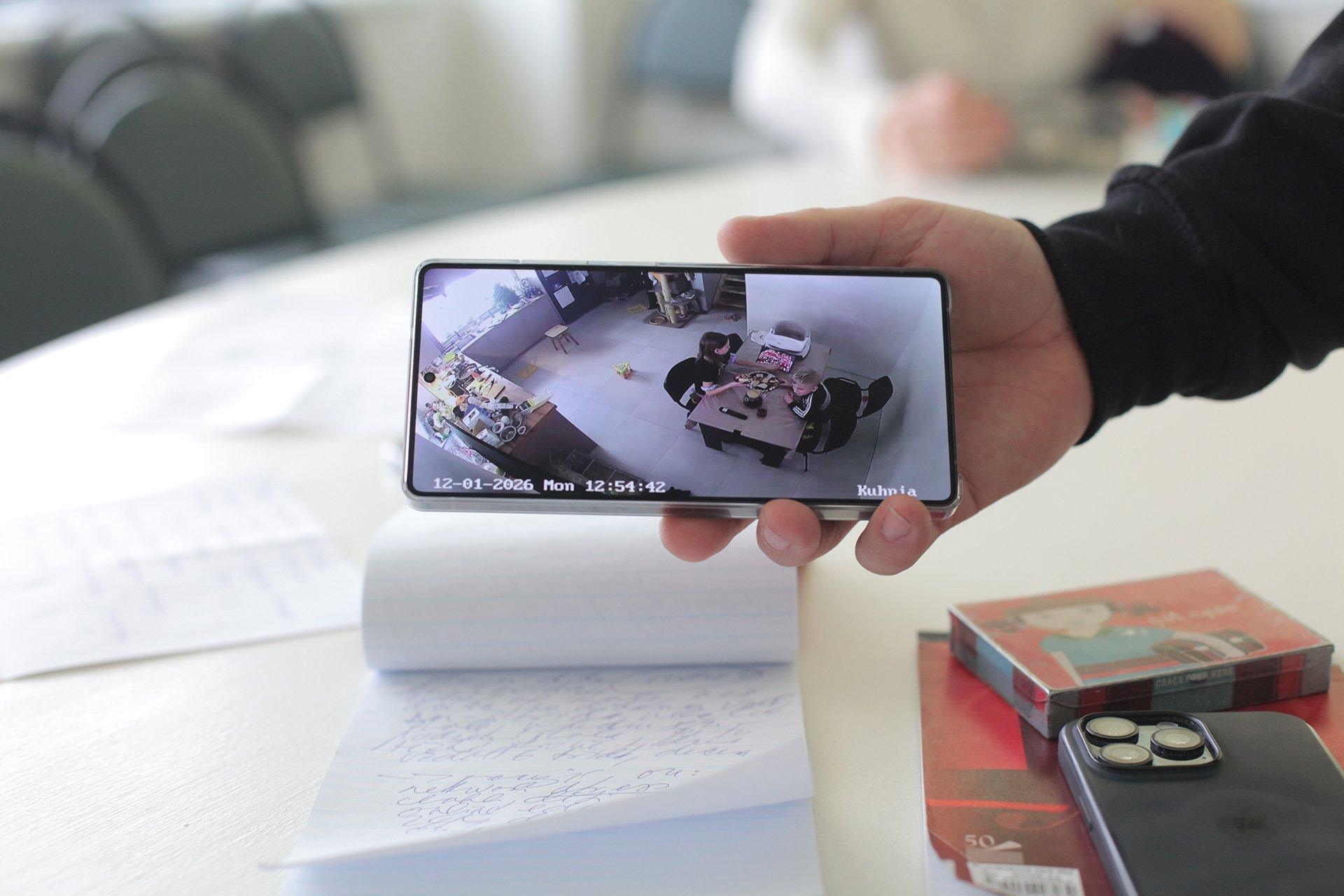
Everyone gets up at 7:30 a.m.; at nine, the parents head off to work (little Oleksandr usually goes with Kateryna), and the older kids log in for online school. “Wait, let’s see if they’re slacking off,” Kateryna says, opening the app on her phone linked to the camera, but no – it’s noon, and both children are sitting quietly in the kitchen eating their prepared chicken broth with an egg. The Muchalins have cameras covering the entire house, not because of thieves, but so they can keep an eye on whether the children are safe during air raid alerts, which can easily sound as often as six times a day here.
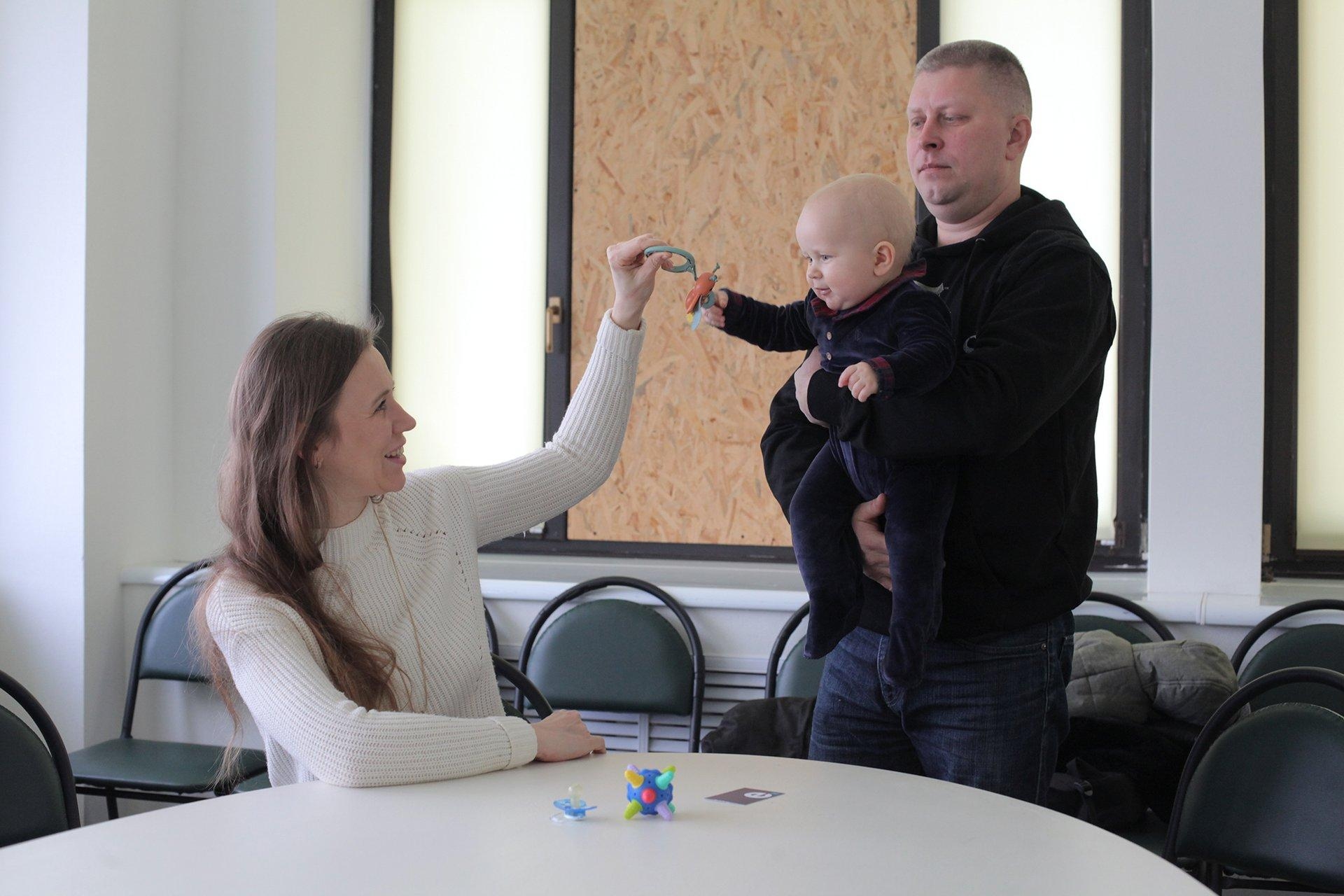
Around 4 p.m. the couple returns home, followed by trips to the kids’ extracurricular activities (the elder boy plays soccer, the girl goes to dance class), then homework and bedtime. Before bed, there’s a family tradition: each child gets 20 minutes with one parent to talk about five good things that happened to them that day. The son has never seen or experienced a physical school; the daughter remembers it only vaguely. But that is now changing, at least in part. The daughter now has the opportunity to attend an underground school twice a week – it’s a normal school, just in the safety of a shelter, so it’s relatively good.
The children can only meet in person with their grandparents on Yura’s side. They live in Zaporizhzhia in southern Ukraine, so they’re able to visit each other. Kateryna’s parents weren’t able to leave the territory now occupied by the Russians in time, so they’ve never met Oleksandr in person. Where they live, the signal is terrible, so they communicate only through occasional text messages. It is possible to send a photo via WhatsApp to larger occupied cities. So the grandparents have traveled to Luhansk a few times and are somewhat familiar with their grandchildren’s faces.
“We’re not crazy, of course. If things got worse, if it got really bad and we had to spend our days in the basement under our house, we’d leave,” Yura says. “But that’s not the case yet. We’re living a happy life,” says Kateryna, absentmindedly stroking her young son’s hand. “There’s no point in worrying about the terrible things that might happen. The important thing is to believe that everything will turn out all right.”
Ondrej Kundra and Tomas Brolik are deputy editors in chief of the Czech weekly Respekt, where the original version of this story was published in Czech. English translation by Transitions. Republished by permission.


